
The Syracuse Homeowner’s Guide to Masonry Integrity: Safety, Science, and Structural Liability
In the construction industry, we often say that a building is only as good as its envelope, which is the skin that protects the interior from the elements. In Central New York, that envelope is under constant siege. For A-Z Construction, masonry is not just about aesthetics: it is about engineering a defense against one of the harshest climates in the United States.
While a crumbling chimney or a cracked front step might seem like a minor cosmetic flaw, these are often the first symptoms of structural fatigue. Ignoring them does not just jeopardize your home’s value; it creates a chain of physical and legal risks. This guide explores the technical reality of masonry failure in Onondaga County and how proactive maintenance protects your property and your liability and large chimney repairs.
1. The Physics of Failure: Why Syracuse Masonry Breaks
To understand why your chimney is shedding bricks, you have to understand the science of the Freeze-Thaw Cycle. Masonry materials, including brick, stone, and mortar, are porous. They contain a network of microscopic capillaries. In Syracuse, we experience a perfect storm of high humidity, heavy lake-effect precipitation, and temperatures that dance around the freezing mark over 140 times a year.
The Coefficient of Expansion
When water enters a brick and freezes, it undergoes a phase change, increasing in volume by approximately 9 percent. This expansion creates Hydrostatic Pressure within the pores of the masonry.
In this simplified model, if the pressure generated by the expanding ice exceeds the Tensile Strength of the brick or mortar, the internal structure ruptures. This is why you see Spalling, which is when the face of the brick literally pops off. Once the hard-fired outer crust of a brick is lost, the softer, more porous interior is exposed, leading to an exponential increase in the rate of decay.
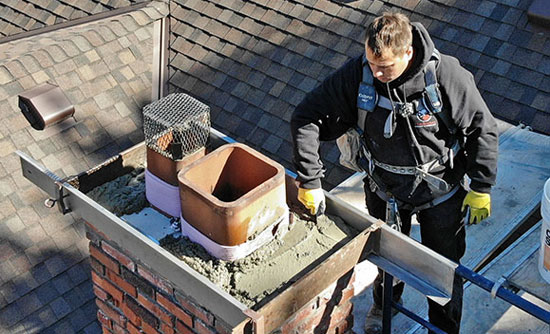
2. The Chimney: A High-Risk Vertical Structure
The chimney is the most exposed part of your home. It catches the wind, the rain, and the snow from every direction. Unlike the walls of your home, which are protected by eaves, the chimney stands alone against the Syracuse elements.
Structural Stability and Lateral Loads
A chimney is a heavy masonry stack that relies on its own weight and a series of metal wall ties to stay upright. In older Syracuse homes built between 1920 and 1950, these metal ties have often rusted away or were never installed to modern standards.
- The Risk: If the mortar joints at the base of the chimney or the roofline wash away, the chimney loses its lateral stability. During a high-wind event, a compromised chimney can lean or collapse.
- The Liability: A falling chimney does not just damage the roof; it can weigh several thousand pounds. If it falls outward onto a neighbor’s property or a public sidewalk, the property owner may be held liable for failing to maintain a known structural hazard.
- The Restoration Solution: Keeping your chimney safe through professional repair or restoration is the only way to ensure these structural connections remain secure. By reinforcing the masonry ties and repointing the base joints, we transition the structure from a potential hazard back into a stable architectural asset. This proactive maintenance serves as documented proof that you are prioritizing the safety of your household and the surrounding Syracuse community.
Internal Decay and CO Risks
When we inspect chimneys in neighborhoods like Eastwood or the Valley, we often find flue blockages. As the interior liners or clay tiles age, they crack. Shards of these tiles fall and collect at the smoke shelf. This blockage prevents the free flow of combustion gases, forcing Carbon Monoxide back into the home.
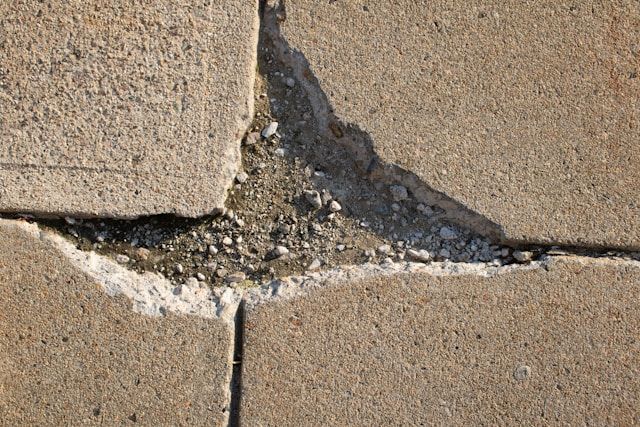
3. Walkways, Steps, and the Duty of Care
While the chimney is a vertical risk, your entry steps and sidewalks represent a daily horizontal risk. This is where most premises liability claims originate.
The Slip and Trip Science
In Syracuse, Frost Heave is a major factor. As the ground freezes, the soil expands, pushing concrete slabs and stone steps upward. This is rarely a uniform process.
- Differential Settling: When the ground thaws, the masonry does not always settle back into its original position. This creates edges and uneven transitions in sidewalks, steps, and other stucco and concrete walks around a property.
- Legal Standards: Most building codes and local Syracuse ordinances define a trip hazard as any vertical change in level of 1/4 to 1/2 inch or more.
- The Masonry Fix: A-Z Construction does not just patch these issues. We address the sub-base drainage to prevent water from pooling under the steps in the first place, stopping the cycle of heaving.
4. How-To: The 5-Minute Masonry Safety Audit
We recommend that homeowners perform this chimney inspection every spring after the snow melts to identify risks before they become injuries.
- The Visual Plumb Test: Stand at a distance and look at your chimney against the straight line of your house siding. Any visible gap between the house and the chimney stack is a sign of foundation settling or tie-failure.
- The Red Dust Scan: Check your gutters and the base of your chimney. If you see piles of red sand or thin wafers of brick, your masonry is actively spalling.
- The Screwdriver Test: Take a flat-head screwdriver and gently poke the mortar joints in your front steps. If the mortar feels like stone, it is healthy. If it crumbles into a sandy powder, the bond has failed.
- The Hollow Tap: Walk firmly on your masonry porch or steps. A hollow thud indicates that a void has formed underneath the masonry, often due to water washing away the sub-base.
- The Chimney Crown Check: Using binoculars, look at the very top of the chimney. The concrete cap should be smooth. If you see cracks or vegetation growing out of the top, water is being funneled directly into the center of your walls.
5. Local FAQ: Masonry Maintenance in Onondaga County
Q: Why can’t I just use store-bought cement to fix my steps?
A: Store-bought cement is often much harder than the original 50-year-old bricks on your Syracuse home. If the mortar is harder than the brick, the brick will crack during the next freeze. Professional tuckpointing involves matching the compressive strength of the mortar to the existing masonry.
Q: Is a leaning chimney always a total replacement?
A: Not necessarily. If caught early, we can often re-tie the chimney to the structure and stabilize the foundation. However, if the lean has caused the flue liner to shift, it may be a fire hazard that requires a more significant rebuild.
Q: Does the City of Syracuse fine homeowners for cracked sidewalks?
A: Yes, the city can issue Notice to Repair citations. Beyond the fine, the greater risk is the civil liability if a pedestrian trips on a heaved slab on your property.
Q: How often should a Syracuse chimney be professionally inspected?
A: Given our weather patterns, a structural inspection every 2 to 3 years is recommended. If you use your fireplace frequently, an annual safety check is a must.
The A-Z Construction Commitment
Masonry is a living part of your home: it breathes, moves, and reacts to the environment. By addressing spalling bricks and uneven walkways today, you are doing more than just improving your home’s appearance. You are fulfilling your duty of care as a property owner and ensuring that your home remains a safe haven rather than a liability.
Contact A-Z Construction today for a professional masonry safety audit.
Or call 315-488-5292 — Monday through Saturday, 7:00 AM to 7:00 PM.
Related: Chimney repair and rebuild services in Syracuse, NY
A-Z Construction & Restoration | Syracuse, NY | Serving Onondaga County Since 1984 | Licensed & Insured | EPA Lead-Safe Certified