A-Z Construction & Restoration

7 Signs Your Fireplace Needs Restoration Before Winter

7 Signs Your Fireplace Needs Restoration Before Winter

That first cozy fire of the season is something we all look forward to. But as the leaves start to turn, it’s the perfect time to ask yourself a critical question: is my fireplace truly ready to keep my family safe and warm? Ignoring the signs that you need to restore fireplace isn’t just about comfort; it’s a gamble with your home’s safety and efficiency.

You see, what looks like a small crack or a bit of rust can be a warning of bigger issues hiding behind the bricks. From dangerous chimney fires sparked by creosote to carbon monoxide sneaking into your living room, the risks of postponing a fireplace inspection are too high to ignore. Let’s walk through the seven key signs that mean it’s time to call in the pros, making sure your winter is both cozy and safe.

Why Should You Restore Your Fireplace Before Winter

So, what does restoring a fireplace actually involve? Think of it as a health check-up for your entire fireplace. It goes far beyond a simple sweep. It addresses the root causes of problems, from repointing crumbling mortar to replacing a rusted fireplace damper or even installing a new, efficient flue liner. This process is the best way to restore a fireplace for the long run, turning a potential hazard back into the safe, beautiful centerpiece of your home.

Choosing professional fireplace restorations, especially those that use eco-friendly fireplace restoration methods, offers you a handful of key benefits that go far beyond just looks. Those include:

  • Safety: This is the biggest one. A full restoration directly tackles fire hazards and prevents dangerous carbon monoxide from entering your home.
  • Cost Savings: An efficient fireplace heats your room better, meaning you can turn down the thermostat and save on those winter energy bills.
  • Long-Term Peace of Mind: Fixing small issues now prevents them from becoming massive, expensive problems down the road.
  • A Greener Hearth: For the environmentally conscious homeowners, modern updates can make your fireplace a more sustainable heat source. 

7 Signs Your Fireplace Needs Restoration

1.Visible Cracks or Deteriorating Masonry

If you spot hairline cracks in your firebrick or notice the mortar between bricks is crumbling, it’s a clear sign your fireplace is under stress. Think of it this way: these small openings let water seep in, and when winter hits, that water freezes and expands inside the masonry, forcing those cracks to widen with every cold snap.

This cycle of freezing and thawing can turn a minor issue into a major structural problem. Which is exactly why addressing this is a fundamental part of fireplace restoration. A professional can properly repair the damage, making sure your fireplace is solid and ready for the winter season ahead.

2.Water Damage and Staining

Have you seen a white, chalky powder on your chimney or rusty stains on the metal parts inside your fireplace? That’s your fireplace telling you it has a moisture problem. That white powder, called efflorescence, is a deposit left behind when water moves through the brick. And rust on the damper or firebox is a sure sign that water is getting in and shouldn’t be.

Left alone, this moisture will cause more damage all winter long. It weakens the masonry from the inside and can ruin metal components. This is where a good fireplace restoration company can make all the difference. They don’t just clean the stains; they find where the water is coming in and fix it for good, protecting your entire system.

3.Damaged or Malfunctioning Damper

Can you remember the last time you checked your fireplace damper? This metal flap is your main control for airflow. If it’s stuck, won’t open all the way, or doesn’t close tightly, you’ve got a problem. A damper that’s stuck open lets all your warm indoor air escape right up the chimney the whole winter, which makes your heating system work harder and your bills go up.

If it doesn’t open properly, smoke can’t get out and will pour back into your living room. Fixing a faulty damper is a key part of getting your fireplace winter-ready. Once this is sorted as part of your fireplace cleaning and repair process, you’ll notice a big difference in how well your fireplace performs.

4.Smoke Entering the Living Space

There’s nothing that ruins a cozy fire faster than smoke filling your living room. If you’re seeing this, your fireplace is telling you it can’t breathe properly. This often happens because of a blockage in the flue, like a bird’s nest from last spring, or because the chimney itself is the wrong size or height to create a good draft.

This isn’t just an annoyance; it’s a safety risk, as smoke contains harmful gases. Before winter, you need to find and fix the root cause. For many older homes, the solution might involve a project to restore the blocked off fireplace in old homes, ensuring the entire ventilation system is open and working correctly. A professional can diagnose the exact issue, so your fires burn cleanly and safely all season.

5.Outdated or Worn Fireplace Surround

Is the area around your fireplace looking a little tired? Maybe the hearth is cracked, the tiles are loose, or the whole design feels decades out of date. While it might seem like just a cosmetic issue, a worn surround can hint at deeper problems. Loose materials can be a safety hazard, and an outdated design might not meet current clearances for combustible materials.

Investing in this part of your project creates the beautiful, finished look that makes a fireplace a true centerpiece. The result is one of those stunning restored fireplaces that not only looks brand new but is also perfectly safe to enjoy. It’s about making your fireplace a source of pride and comfort, just in time for those long winter evenings spent indoors.

6.Accumulated Soot, Creosote, or Debris

When was the last time you took a flashlight and looked up inside your chimney? If you see a thick, shiny black buildup on the walls, that’s creosote. This stuff is highly flammable and is the main cause of dangerous chimney fires.

A simple sweeping can handle light soot, but heavy, glazed creosote often means there are bigger issues, like poor burning habits or drafting problems. This is where knowing the tools needed for restoring a fireplace is important because it’s a job for a professional with the right equipment. They can safely remove this hazardous buildup and check for any hidden damage, so you can safely enjoy your winter evenings by the fire.

7.Inefficient Heating / Chilly Rooms

Does your fireplace burn through wood without really warming the room? Or do you feel a cold draft coming from it when it’s not in use? An inefficient fireplace is often a sign of underlying problems we’ve already discussed. It could be a poorly sealing damper letting warm air escape, cracks in the masonry drawing in cold air, or a blockage preventing proper airflow.

When your fireplace is restored properly, all these issues are fixed. The result is a fireplace that actually heats your space effectively, turning it into a source of genuine warmth. This not only makes your winter nights cozier but also helps lower your heating bills.

DIY Checks and Seasonal Maintenance Tips

While a full fireplace restoration is a job for the pros, there are a few simple checks you can do yourself to spot problems early. Here’s a quick list to help you give your fireplace a pre-winter once-over:

  • The Flashlight Test: Look up into the chimney with a strong light. Check for heavy soot, shiny creosote glaze, or any obvious debris blocking the flue.
  • Damper Operation: Open and close the damper a few times. It should move smoothly and create a tight seal when closed to keep drafts out.
  • Mortar and Brick Inspection: Scan the interior firebox and the exterior chimney for any crumbling mortar, cracked bricks, or white, powdery stains.
  • Clear the Firebox: Safely remove old ashes and debris. A clean firebox helps with airflow and lets you see if there are any cracks on the floor or walls.

Remember, these are just surface checks. If you spot anything concerning during your inspection, it’s time to call a professional for a thorough fireplace inspection.

Conclusion

As winter approaches, your fireplace should be a source of comfort, not concern. From cracks and water stains to smoke issues and inefficiency, we’ve walked through the key signs that mean your fireplace needs professional attention.

When you’re ready for that peace of mind, the team at A-Z Construction & Restoration is here to help. Our professional Fireplace Restoration service is designed to bring your fireplace back to life, ensuring it is safe, efficient, and ready for use, so you can safely enjoy those warm, cozy winter evenings with your loved ones. Give us a call at 315-488-5292 or visit https://a-z-construction.com/fireplace-restoration/ to learn more about how we can help you prepare for winter.

Frequently Asked Questions

Look for a black, shiny, and sticky or crusty substance inside your chimney. A gritty, black powder is soot, but a tar-like glaze is creosote, which is highly flammable.

The cost varies widely based on the work needed, from minor repointing to a full rebuild. For an accurate quote, it's best to get a professional inspection for your specific situation.

A well-maintained masonry fireplace can last 50 to 100 years. Its lifespan depends heavily on the quality of materials, climate exposure, and how often it receives proper maintenance and cleaning.

Start with a visual inspection for cracks, debris, and a working damper. The most important step is to schedule a professional chimney cleaning and inspection to ensure it's safe to use.

Yes, absolutely. Smoke coming into the room is usually caused by a blockage, a damaged flue liner, or drafting issues. A professional can diagnose the exact cause and fix it. 

7 Signs Your Garage Floor Needs Repairs & Restoration in 2026

7 Signs Your Garage Floor Needs Repairs & Restoration in 2026

You know that feeling when you walk into your garage and something just feels… off? Maybe you’re asking yourself, “why is my garage floor always so dusty?” or “what caused this new crack where I park my car?” But what if you were told that those aren’t just little annoyances?

Many of us think of concrete as being permanent and unbreakable. However, the truth is, your garage floor is a tough-as-nails workhorse that puts up with a lot—from the weight of your vehicle and changing seasons to spilled oil and daily foot traffic. And over time, all that stress starts to show.

The good news is that modern solutions have evolved, and you don’t need to live with a crumbling, ugly floor. As we move into 2026, the huge mess and cost of replacing a garage floor is often unnecessary and in most cases, a professional garage floor restoration can bring it back to life, making it stronger and more beautiful than the day it was poured. Let’s look at the seven signs that it’s time for your garage floor to get the help it needs.

When working on a home improvement or construction project, whether it’s building a garden wall, laying a patio, or repairing brickwork, one question often arises: Can I cut bricks with a tile saw? While the answer is yes, it comes with limitations. Tile saws, especially wet models, can cut thin bricks, but they’re not designed for heavy-duty masonry work. Masonry saws, on the other hand, are purpose-built for cutting bricks, blocks, and stone, making them the professional choice for durability and precision.

In this guide, we’ll compare tile saws and masonry saws, explain how to cut bricks step by step, cover safety essentials, and explore alternatives. We’ll also focus on what homeowners and masonry contractors in Syracuse, NY, need to know before starting a brick-cutting project.

1. Webs of Hairline Crack

Remember that single crack you spotted under your car? On its own, a hairline crack might not be a huge deal. But when that one crack invites its friends and starts forming a spiderweb across your floor, it’s your first clear sign that you need to start repairing garage floor cracks.

So, what’s actually happening here? Think of your concrete slab like a giant sidewalk. When the ground underneath shifts slightly with the seasons, or if the concrete itself was a little weak when poured, it relieves the stress by cracking. This is often when homeowners start searching for how to handle large cracks in garage floor surfaces, as water can seep in, freeze, and slowly make the problem worse.

This is where a simple garage floor fix becomes important. The goal isn’t just to cover them up. A professional service will properly clean and fill these cracks, which is a crucial first step in any lasting garage floor concrete restoration. It’s all about creating a solid foundation for the beautiful floor that comes next.

2. The Floor is Uneven or Sinking

Now, let’s talk about something you can feel with your feet. If walking across your garage feels a little like hiking on a gentle hill, you might be dealing with an uneven garage floor. This is different from just cracks, as you might notice puddles that never drain or even find that your car door swings shut on its own when you park.

This often happens when the soil underneath compacts or washes away over time. It’s a common reason people start looking into leveling a garage floor. This isn’t just a tripping hazard; an uneven surface can prevent water from draining properly, which can lead to the very cracking we just talked about.

So, “what’s involved in garage floor leveling?” It’s all about creating a perfectly flat, stable base. This crucial step, often part of a full garage floor restoration, is the “reset” your floor needs before any new coating is applied.

3. The Surface is Pitted and Rough

Now, let’s zoom in on the surface itself. If your garage floor has started to look like a rocky path, with a rough, crumbly texture, you have what’s known as a pitted garage floor. This is the classic worn concrete floor, often caused by winter salt, chemical spills, or just years of abrasion.

So, “what’s the best way to fix a pitted garage floor?” This is where smoothing rough concrete through professional grinding is the essential first step. It’s the perfect preparation for concrete resurfacing, which essentially gives your old slab a brand-new, incredibly durable top layer and is a fantastic long-term garage floor fix.

4. A Chalky Dust Coats Everything

Let’s talk about a problem you might be constantly battling; dust. If you ever find yourself asking, “How do I stop my garage floor from being so dusty?” you’re dealing with something called concrete dusting. That fine, gray powder isn’t dirt from outside; it’s actually the surface of your floor slowly wearing away.

This happens when the top layer of concrete weakens and breaks down under foot and vehicle traffic. Simply sealing a garage floor with a cheap product often won’t solve this. What you really need is a professional garage floor repair that comes with the most durable concrete coating. This specialized coating bonds permanently with the concrete, creating a hard, non-porous shell that locks the dust in for good.

5. Stubborn Stains and Tire Marks Won't Budge

Moving onto those stubborn marks that just won’t come out. In case your garage floor looks like a map of every oil leak and chemical spill from the past decade, you’re probably wondering if you can really refinish concrete garage floor surfaces to look new again. The answer is absolutely yes!

Those deep-set stains mean your concrete has been absorbing liquids for years because it didn’t have a proper protective seal. This is where the magic of repairing garage floor surfaces comes in. The process isn’t just about covering up old stains – it involves patching garage floor imperfections and applying a new, non-porous surface that completely transforms its looks. Think of it as giving your floor a fresh start that’s both beautiful and practical for your daily use.

6. Your Floor Has More Holes Than a Golf Course

Just like stubborn stains can make a floor look tired, a surface full of small, coarse holes makes it feel damaged beyond a simple clean-up. If your floor is starting to resemble Swiss cheese, this is a classic case of pitting, which calls for specific attention to repairing pitted concrete.

These little craters often appear after winter, where moisture freezes and expands inside the slab, or from chemical spills slowly eating away at the surface. It’s a clear signal your floor needs more than a simple patch job. Addressing this damage is a fundamental step in redoing garage floor surfaces the right way., since the process carefully fills every imperfection to create a flawlessly smooth foundation, giving you a beautiful and durable finish that lasts for years to come.

7. Water Pools or a White Powder Appears

After noticing all the cracks and pits, you might spot something else, like puddles that stick around long after you pull in a wet car, or a strange white, chalky powder on the surface. That powder is called efflorescence, and it’s a sure sign of moisture moving through your concrete.

This is different from the pitting caused by moisture, as this shows water is actively traveling through the slab from below. Left alone, this constant dampness can break down the concrete from the inside and bring apart any coating you put on top. Addressing this moisture is a non-negotiable final step before any true restoration can begin, which makes sure your new floor stays dry and intact for the long run.

When It's Time to Call in the Experts

Sometimes, the signs are clear that a DIY fix just won’t cut it. When you see multiple issues at once, maybe a cracked, uneven, and pitted surface all in one, this is one of the biggest signs you need to call a concrete garage floor repair service.

You might find yourself searching for “how to repair cracks in garage floor that keep coming back?” That’s your cue that the problem needs a professional diagnosis. A trusted pro can assess whether those cracks are minor or point to a deeper issue with the slab itself. Bringing in an expert at this stage saves you time, money, and the frustration of temporary fixes, ensuring your garage floor is restored to a safe, durable, and like-new condition.

Conclusion

So, there you have it. As we look ahead to 2026, knowing how to spot these signals, from the first spiderweb cracks and unsettling uneven spots to the constant dust and stubborn stains, is more valuable than ever. Your garage floor has a whole vocabulary for telling you it needs attention, and catching these signs early is the key to preventing more extensive damage. 

If after reading this, you’ve recognized a few too many of these signs in your own garage, it might be time for a professional assessment. Our team at A-Z Construction & Restoration specializes in bringing worn-out garage floors back to life. We provide expert Floor Repair & Restoration services designed to return your garage floor to a like-new condition. Give us a call at 315-488-5292 or visit our detailed service page at A-Z Construction to learn more about how we can help.

Frequently Asked Questions

Yes, absolutely. In most cases, professional garage floor restoration techniques like resurfacing can repair damage and apply a new coating, making a full slab replacement unnecessary.

The dust, called concrete dusting, means the surface is breaking down. It happens when the top layer of concrete weakens from wear, traffic, and a lack of a proper protective seal.

Widening or spiderweb cracks are a serious sign. They allow water to seep in, which can freeze and expand, making the cracks larger and potentially leading to structural issues over time.

Fixing an uneven garage floor often involves a process called leveling. Professionals use self-leveling compounds to create a flat, stable surface, which is a crucial step before applying any new coating.

The white powder is efflorescence. It is a clear sign of moisture moving through your concrete from below, which needs to be addressed before any restoration to ensure the new coating adheres properly.

7 Important Questions to Ask a Driveway Contractor Before Hiring

7 Important Questions to Ask a Driveway Contractor Before Hiring

When you want to upgrade your driveway, the first step is to hire a professional contractor who knows exactly what to do. Before hiring, you must understand how a professional contractor can make a real difference. But what to ask from professional driveway contractors is important, because asking these questions early helps you avoid delays and costly damage to your driveway. 

Different Contractors have a variety of knowledge and experience, but when you do not have a clear idea about the driveway, material, their costs, and the root cause of the problems, you will end up with drainage, surface, and many other problems that you did not even expect, that are not discussed upfront.  

Key Things to Know Before Driveway Installation

Before installing a driveway, you must know the mistakes during installation and discuss them at the time of hiring a driveway contractors. But even before hiring, you must know: 

1. Project Goals

Create a checklist that outlines your goals and clearly defines your objectives and expectations for the contractor, so that they consider the purpose, desired appearance, and functional requirements before planning and building or repairing.  

2. Budget Planning

If the project is planned according to the decided budget, it ensures that you can choose a contractor who offers quality services within your financial constraints. So, being realistic, you have to tell your contractor a clear quote of price that represents your budget for your driveway project installation,considering all potential costs, including materials, labor, and any unforeseen expenses.  

3. Timeline Expectations

When you are starting a project, first of all, you must calculate when your project may start and end, and fit your schedule and standards. Discuss the decided time with the potential driveway contractors so they work accordingly, evaluate he project timeline and how it fits your schedule. Discuss the estimated duration of the project with potential contractors and ensure that their timelines align with your availability and expectations.

After knowing the key features, you have to checklist to consider these 7 questions that you may ask a driveway contractor that give you insight into how a contractor works, how much they have knowledge, and how they will work on the project. 

1: Are You Properly Licensed and Insured?

Before starting a project, you must ensure that your contractor is licensed and insured so that if anyone wants to see the proof, they should be able to show of current licensing and insurance. This includes general liability coverage and workers’ compensation. If any accident happens or property gets  damaged, these policies protect both you and the team as well.

Ask your contractor to show the documentation, and then make sure the name on the policy matches the name of the company you are hiring. It is the best possible way to spot contractors operating under different names or those without proper coverage. A-Z Construction & Restoration holds all necessary certificates and holds full insurance, and is ready to provide that information when asked. 

2: What Makes Your Company Different from Others?

By asking this question, you can know the values and approaches they are using, giving you room to choose the best contractor for your driveway project. If you get a strong answer that includes proper details about the team, training sessions, communication, and process, that means you are choosing the best.  Because the weak one starts the conversation with prices and ends it on vague promises.

A-Z Construction & Restoration, our experienced team delivers professional driveway services to homeowners across the region. By merging quality craftsmanship and lasting materials, we bring lasting results with consistency. Our team responds quickly, explains every step, and deals with every project with proactive approaches and clear communication skills.  

3: Do You Offer a Written Contract that Contains all Details of Work?

It is important to ask any contractor whether they will make proper contact or not because a specific contract protects everyone who is involved. Containing the full scope of the project, it includes all specific outlines, materials, timelines, prep work, and payment terms. Without a clear quotation and agreement, you may find difficulties in the future, as you have no idea about the process and what happens if plans need to expand.

Many contractors start the process with a handshake agreement without keeping anything clear or any written document, even without keeping the communication transparent. Our contractors are accountable as they draw a complete picture of whatever they will take steps to complete the project. If something is messy or not clear or does not make sense, we explain it, because everyone benefits from shared expectations. 

4: Ask for a Free Estimation and an Exact Estimation?

First of all, contractors may visit your property and provide you with a quote that refers to the materials cost and labour, giving you a complete sense of whether your project is matching with your budget or not. So it is important to ask your contractor if they provide a free estimation and a clear quote. You must know that here estimates that seem too low, or leave out details, may move you forward with shocking costs and extra charges later.

What if your mind changes during the construction of the project, like you want to add a different material or change the layout, and it leaves you with confusion about what to do now? Here, you must be clear that if such a situation occurs, what is the solution, and how the contractor can help you with that. A-Z Construction & Restoration handles such problems and adjusts prices in such a way that both parties enjoy the result with clear communication. Our contractors provide you with a complete upfront of the project so you can budget confidently and avoid surprises.   

5: How Do We Start the Project?

The most important thing that you need to know that how a contractor starts the project. If the contractor answers that they will start with base preparation, then you are working with the right person. Because without a well-constructed base, even high-quality materials shift, crack, or sink over time. 

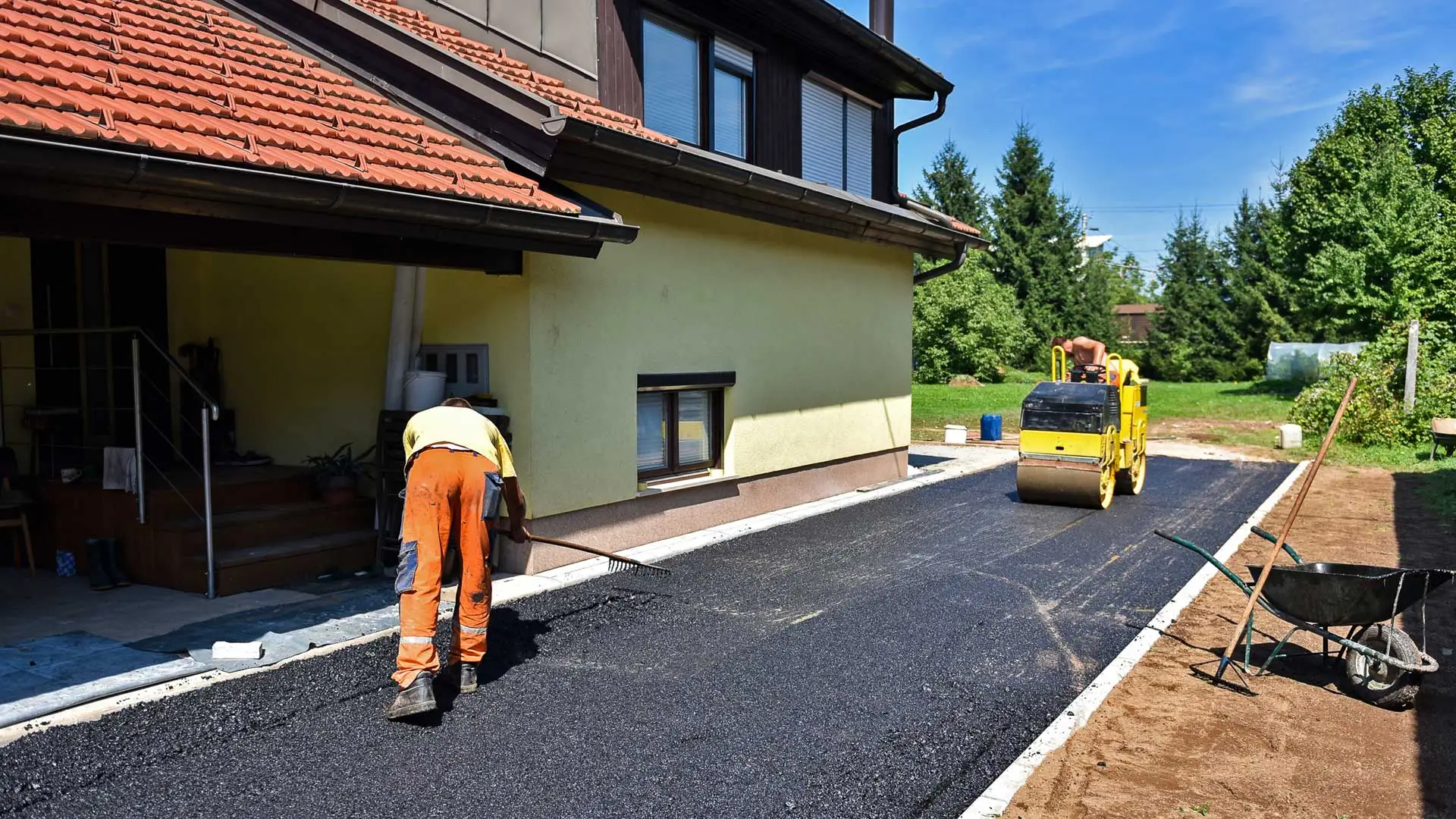
But a professional starts with planning and preparing the site and creating a stable base of gravel, then installs structures or frames that define the shape of the driveway and slope. After laying down rebar or wire mesh for reinforcement, they filled it with concrete. And then they level and smooth the wet concrete with tools like a screed and bull float. Finally, they end the process to control joints that are cut to prevent cracking, the surface is finished, and the concrete is allowed to cure for at least seven days, during which it must be kept moist, before light use. 

At  A-Z Construction & Restoration, this is the complete process we apply to get desirable results without compromising quality. Our team builds each base with durability, using compatible materials and verified methods that support structure and drainage.

6: Do You Provide Warranty? If yes, then Which Kind Of?

While asking for a warranty, you must know what it is and how it works. Some warranties cover materials, while others cover the workmanship. Both are important and should be clearly explained in writing. But here is the question that you need to ask the contractor that whether the warranty is involved or not, if yes, then what is the type? Here is a red flag that if they avoid discussing this topic, then your whole project is at risk. 

But A-Z Construction & Restoration provides a clear warranty that includes the type of warranties on all residential projects. If anything is not written in it should be due to installation issues, and you can clearly mention that we are open to discussing and negotiating. 

7: Can I See The Most Recent Portfolio?

Before hiring any remodeling contractor, you must check the previous work or even cross-check the feedback of past clients of the business. And if everything goes unnoticed or smoothly, then you’re on the right track to the hiring process. For satisfaction, ask for the previous photos; it helps to see examples that reflect different sizes and complexities. If you get a reference link, it also gives you a chance to ask how the team communicated, how the job site was completed, and how satisfied past clients were with the final result.
We are always glad to provide references and examples of past paving and driveway projects, because we aim to provide evidence that speaks for itself. 

Wrapping Up

The above given questions will help you to hire a contractor as well as save time, money, and your home.  With the help of our guide, you can set the stage for a better experience from start to finish.

We welcome those questions and believe homeowners should feel confident asking about licensing, estimates, warranties, and everything in between. Because we know it is your driveway, and you should feel good about the team putting it in.
 

9 Key Chimney Repair Issues and When to Rebuild

9 Key Chimney Repair Issues and When to Rebuild

On a cold winter evening, when you were sitting near the fireplace with your family. The fire is glowing, but suddenly you notice smoke floating into your living room instead of going up the chimney. Or perhaps, on the next morning, when you step outside and see pieces of brick lying on the ground.

In such moments, you have to think: “Do I just repair the chimney, or is it time to rebuild the whole thing?”

Here is the reality that you have to know your chimney works hard year after year. Due to constant usage in cold areas, it faces heat, rain, snow, and storms. So with time, this pressure causes cracks, leaning, leaks, or even structural failure. Sometimes, small problems can be fixed with simple repairs, but usually the damage is so extensive that the only safe way is a complete rebuild.

In this guide, we will discuss 9 key chimney problems with complete explanations in simple words to guide you when a repair is enough, or when to consider a rebuild.  

1. Cracked Bricks: Small Cracks That Turn Into Big Problems

Chimney bricks keep the chimney strong and safe. But over time, rain, snow, and heat can cause them to crack. At first, the cracks may look small. When water enters these cracks and freezes in winter, they grow bigger. Later, you might even see pieces of brick falling off.

If only one or two bricks are cracked, they can usually be replaced. But when many bricks are cracked, the whole chimney becomes weak. In that case, rebuilding part of the chimney — or even the full chimney — is the safer choice.

Repair or Rebuild?

  • Repair: One or two small cracks → replace the bricks.
  • Rebuild: Many cracks or deep wall cracks → rebuilding is stronger and lasts longer.

2. Leaning Chimney: When the Chimney Doesn’t Stand Straight

Sometimes you’ll notice the chimney isn’t standing straight. It may be tilting to one side or pulling away from the house. This usually happens when the foundation is weak, the soil under it shifts, or water damage has worn down the mortar.

Once it starts leaning, the structure is no longer safe. The tilt gets worse with time, and in serious cases the chimney can even fall. That is why a leaning chimney almost always requires rebuilding on a stronger base instead of small repairs.

Repair or Rebuild?

  • Repair: If the tilt is very minor and caught early, some reinforcement might help.
  • Rebuild: In most cases, a leaning chimney is unsafe and needs a full rebuild from the foundation up.

Pro Tip

If you notice your chimney tilting even a little, call a professional right away. Leaning problems get worse fast, and the sooner you fix them, the safer your home will be.

3. Water Damage: Stains, Leaks, and Weak Bricks

Water is one of the biggest enemies of a chimney. When rain or snow keeps getting inside, it leaves behind stains, rust marks, and peeling paint around the chimney. Over time, the bricks and mortar start to weaken. In winter, the water inside the bricks can freeze, making them crack or break apart.

If the damage is ignored, water can spread deeper, cause leaks inside the home, and make the chimney walls unsafe.

Repair or Rebuild?

  • Repair: If the problem is only surface stains or a small leak, waterproofing or fixing the crown may stop more damage.
  • Rebuild: If the bricks are soft, crumbling, or breaking in many places, then a rebuild is often the only lasting solution.

Pro Tip

Keep an eye out for white powdery marks on your chimney (called efflorescence) or rusty streaks. These are early signs of water damage. Fixing leaks early saves a lot of money in the long run.

4. Flaking or Spalling Bricks

Spalling means the surface of bricks is flaking, chipping, or breaking off. This happens when water gets inside the bricks and freezes in cold weather. If just a few bricks are affected, it’s not a big job to replace them. But when many bricks are crumbling, the chimney is losing its strength.

Repair or Rebuild?

  • Repair: Replace one or two damaged bricks.
  • Rebuild: If whole sections of bricks are spalling, a partial or full rebuild is needed.

Pro Tip: Check the ground around your chimney. Pieces of broken brick lying there usually mean spalling is happening.

5. Crumbling Mortar Between Bricks

Mortar is the cement holding the bricks together. Over time, it cracks and crumbles. Small gaps can be fixed by tuckpointing (adding fresh mortar). But if large areas are missing, the bricks loosen, and the chimney may tilt or leak.

Repair or Rebuild?

  • Repair: Small cracks → tuckpointing.
  • Rebuild: Large missing or crumbled sections → rebuild for a stronger structure.

Pro Tip: If you run your finger along the mortar and it turns to powder, it’s time to act.

6. Smoke or Odors Inside the Home

Smoke should always go up and out of the chimney. If smoke enters your home, it means a blockage or damage inside the flue. This is dangerous because it can also let carbon monoxide into the house.

Repair or Rebuild?

  • Repair: Simple blockages (like soot or a bird’s nest) can be cleaned.
  • Rebuild: If the flue liner is cracked or collapsed, rebuilding may be necessary.

Pro Tip: Never ignore smoke indoors. Even if the fire looks small, the gases that come with the smoke are harmful.

7. Damaged Fireplace Firebox

The firebox is where the fire burns. It’s made to handle heat, but cracks in the firebricks or rust on metal parts mean water or heat damage. This puts the rest of your chimney at risk.

Repair or Rebuild?

  • Repair: Small cracks or minor rust may be fixed.
  • Rebuild: If the damage is deep, the firebox or even the chimney structure may need rebuilding.

Pro Tip: Always check the firebox before lighting a fire. Cracks here can spread to hidden areas of the chimney.

8. Cracked or Missing Chimney Crown

The chimney crown is the top cover that keeps rain and snow out. If it’s cracked or broken, water seeps in and damages the bricks below.

Repair or Rebuild?

  • Repair: Minor cracks can often be sealed.

  • Rebuild: If the crown is badly broken or missing, it needs rebuilding — or it will cause bigger problems.

9. Old Age and Wear

Even if there’s no single “big problem,” age can wear out a chimney. Older chimneys often have weak bricks and mortar, or they were built with outdated methods. When problems keep coming back, it’s usually smarter to rebuild once instead of repairing again and again.

Repair or Rebuild?

  • Repair: Small issues may still be fixed.

  • Rebuild: Frequent or repeating problems → full rebuild is safer and more cost-effective.

Pro Tip: If you’re repairing your chimney every year, consider investing in a rebuild. A new structure will last much longer.

Frequently Asked Questions (FAQs)

  • Cracks or gaps in bricks
  • Spalling or flaking bricks
  • Leaning or tilting the chimney
  • Water stains or leaks
  • Smoke enters the house when you light a fire

Yes, small problems (like a cracked brick, broken mortar, or damaged crown) often can be repaired. But if the damage is widespread, structural, or the chimney is leaning, a rebuild is often safer and more reliable.

The cost depends on how badly the chimney is damaged, its height, materials, and whether you do a full rebuild or partial. In many cases, it might cost thousands of dollars. Full rebuilds tend to be much more expensive than repairs. 

It depends on how much damage there is. Sometimes a rebuild takes a few days; more complex rebuilds may take up to a couple of weeks.  

Yes, in many places you’ll need a building permit to rebuild a chimney. The rebuild must meet local building codes for safety.  

You should have your chimney inspected at least once per year. Cleaning (chimney sweeping) should also be annual if you use your fireplace. Regular checkups help find problems early before they become serious.  

  • A chimney crown is a thick, protective top surface (often concrete) that sits over the chimney to keep water from entering.
  • A wash is a thinner coat of concrete or mortar that slopes away from the flue to shed water.

Crowns are generally stronger and more durable than washes.  

How to Clean a Chimney the Right Way

How to Clean a Chimney the Right Way

A fireplace creates comfort and warmth, but the chimney behind it does the real work. Every time you light a fire, smoke, ash, and gases move through the chimney, leaving behind residue. Over time, this residue can clog the flue, reduce efficiency, and create serious hazards. Without regular chimney cleaning, your home could face everything from smoke damage to dangerous chimney fires.

Why Chimney Cleaning Deserves Your Attention

The difficulty is that chimney problems stay hidden. Unlike dust on furniture or stains on walls, soot and creosote accumulate where you can’t easily see them.

Homeowners often don’t realize the risk until smoke backs up into their living room or a professional sweep finds glazed creosote inside. Regular chimney inspection and cleaning keep these risks in check and ensure that your fireplace remains both beautiful and safe.

For homeowners, the challenge is knowing when to attempt DIY chimney cleaning and when to call a CSIA-certified chimney sweep. This guide covers the tools, the process, common pain points, and why chimney services often include both masonry repair and cleaning.

Creosote and Its Risks

Every fire leaves behind by-products, the most dangerous being creosote. In its early stage, creosote looks like flaky soot that brushes away easily. Left untreated, it hardens into tar-like deposits that cling tightly to chimney walls. Advanced creosote is nearly impossible to remove without professional equipment and is a leading cause of chimney fires.

Aside from fire risk, buildup reduces airflow, traps harmful gases, and can create strong odors inside your home. Proper creosote removal is the heart of chimney safety.

Tools You’ll Need for DIY Chimney Cleaning

Cleaning a chimney isn’t just about scrubbing—it requires preparation. Having the right tools makes the job more effective and safer.

Chimney brush: The most important tool. It must match your chimney’s shape (round, square, or rectangular) and size.

Extension rods or ropes: Used to push or pull the brush through the flue.

Protective gear: Gloves, goggles, and a respirator mask are non-negotiable. Chimney soot contains fine particles that harm your lungs.

Drop cloths and plastic sheeting: To protect floors, rugs, and furniture.

Shop vacuum: A heavy-duty vacuum helps remove ash and loosened debris from the firebox.

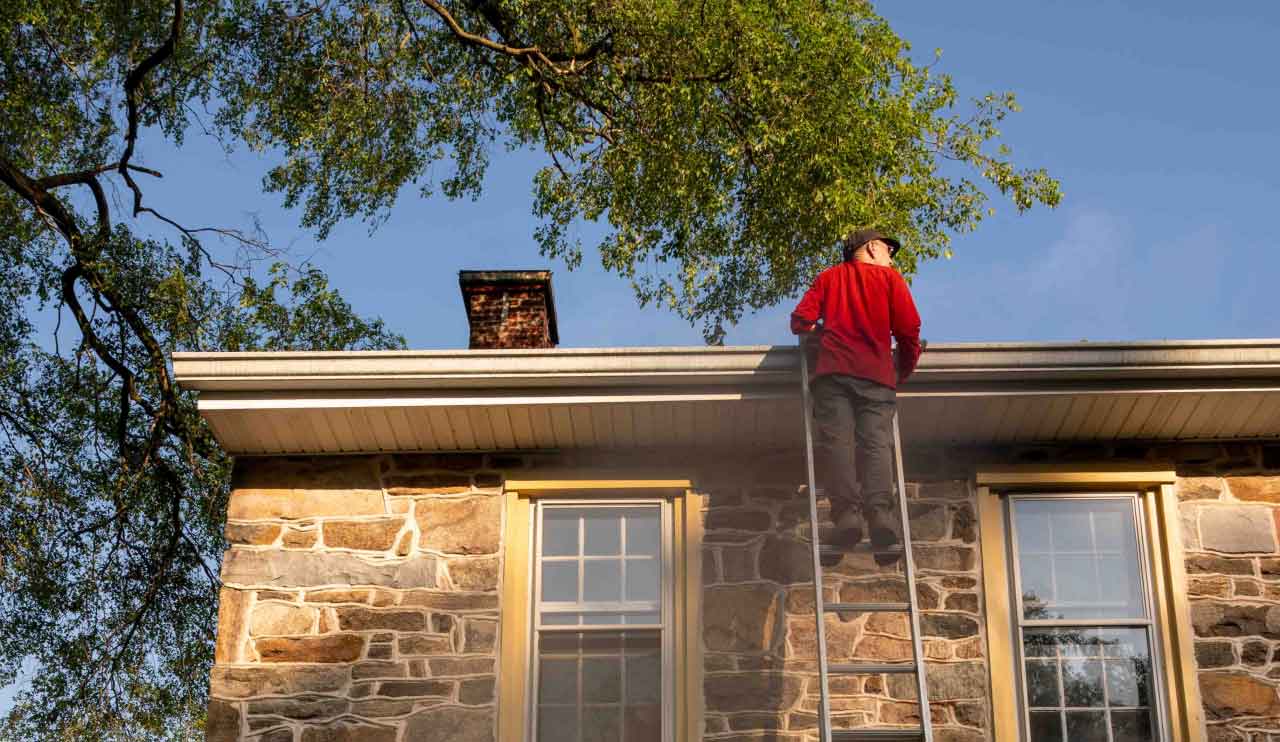
Ladder and flashlight: A sturdy ladder allows roof access for the top-down method, while a flashlight helps you inspect the flue afterward.

If you lack these tools, it may be more cost-effective to call a professional chimney sweep than to buy equipment for a single project.

Step-by-Step: How to Clean a Chimney

Prepare Your Workspace

Move furniture away from the fireplace. Cover the floor with drop cloths and tape plastic sheeting across the hearth opening. This step prevents soot clouds from coating your living space.

Suit Up for Safety

Put on gloves, goggles, and a respirator. Chimney cleaning is dirty and potentially hazardous, protecting yourself is as important as protecting your home.

Choose Your Cleaning Approach

There are two main methods:

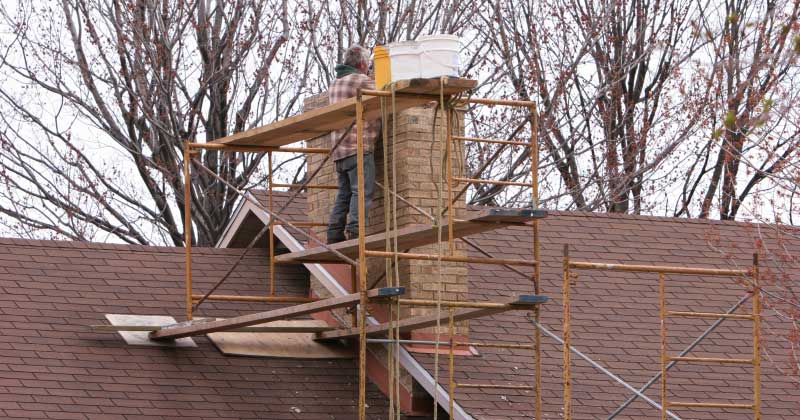
Top-Down Cleaning: Access the chimney from the roof and brush downward. This method is effective but requires ladder safety and balance.

Bottom-Up Cleaning: Work from inside the home using extension rods. This avoids roof risk but can be messier if the fireplace isn’t sealed tightly.

Scrub the Flue

Insert the chimney brush and move it in short, firm strokes up and down. Add extension rods as you move higher. Repeat the process several times to ensure soot and creosote are loosened.

Clear the Firebox

Vacuum or sweep debris from the firebox. Inspect the bricks and mortar for damage. If you find cracks or gaps, you may need masonry chimney repair to restore structural integrity.

Inspect Thoroughly

Shine a flashlight inside the chimney. Look for shiny, hardened creosote, which won’t come off easily with a brush. If you see this, or if the flu remains partially blocked, call a chimney service for professional help.

Why Many Homeowners Call a Professional Chimney Sweep

DIY chimney cleaning works for light soot, but it has limits. A professional chimney sweep offers more than cleaning, they perform chimney inspections to catch hidden damage. From checking flue liners to spotting leaks and recommending repairs, experts bring peace of mind. For homeowners in cold climates such as Syracuse, NY, where fireplaces are heavily used in winter, this professional service is not just convenient, it’s essential.

Masonry Concerns During Chimney Cleaning

Sweeping often reveals problems such as cracked crowns, crumbling mortar, or damaged liners. These issues require masonry chimney repair before they grow worse. That’s why chimney services usually include both cleaning and structural maintenance.

Preventive Measures for Easier Chimney Care

Burn seasoned hardwood instead of softwood, install a chimney cap to block rain and debris, and avoid burning trash or cardboard. Pair these habits with yearly chimney services to keep your fireplace efficient and your home safe.

FAQs About Chimney Cleaning

Most experts recommend annual chimney cleaning, especially if you use your fireplace regularly during winter.

Yes, light soot can be removed with the right tools. However, thick creosote and inspections are best handled by a professional chimney sweep.

Brushing removes early-stage creosote, but glazed deposits require professional tools. Annual chimney inspection ensures safe creosote removal.

Often, yes. Cracked mortar, loose bricks, or a damaged crown may be discovered during cleaning, making masonry chimney repair a common follow-up.

Signs include smoke backing into your home, strange odors, or poor draft. These issues require immediate chimney services to restore safety.

Get Your Chimney Clean the Right Way

A clean chimney protects your family, improves air quality, and keeps your fireplace safe. DIY chimney cleaning is possible for minor buildup, but for serious creosote or hidden masonry damage, a professional chimney sweep is the better choice.Don’t wait until smoke fills your room or cracks appear in your chimney masonry. Protect your home today with expert chimney cleaning, inspection, and repair services.

Visit A-Z Construction to schedule your chimney services now and ensure your fireplace is safe, efficient, and ready for the season.

Can You Cut Bricks with a Tile Saw or Masonry Saw?

Can You Cut Bricks with a Tile Saw or Masonry Saw?

When working on a home improvement or construction project, whether it’s building a garden wall, laying a patio, or repairing brickwork, one question often arises: Can I cut bricks with a tile saw? While the answer is yes, it comes with limitations. Tile saws, especially wet models, can cut thin bricks, but they’re not designed for heavy-duty masonry work. Masonry saws, on the other hand, are purpose-built for cutting bricks, blocks, and stone, making them the professional choice for durability and precision.

In this guide, we’ll compare tile saws and masonry saws, explain how to cut bricks step by step, cover safety essentials, and explore alternatives. We’ll also focus on what homeowners and masonry contractors in Syracuse, NY, need to know before starting a brick-cutting project.

Can a Tile Saw Cut Bricks?

A wet tile saw is versatile enough to cut bricks, but it is not the ideal tool for masonry. Most wet tile saws have a maximum cutting depth of 2 to 2.5 inches, which means they can handle thinner facing bricks but not full-sized masonry bricks or blocks.

If your brick is thicker than the saw’s cutting capacity, you’ll need to make multiple passes or cut from both sides.For a small DIY project, this is manageable. But if you are working on a larger masonry project involving dozens or hundreds of bricks, a tile saw will quickly become impractical.

This is where a dedicated masonry saw makes the process faster, safer, and more efficient.

Dry Tile Saws vs. Masonry Saws

Tile saws, especially dry models, are not designed for cutting masonry. Dry tile saws are meant for lightweight ceramic or porcelain tiles. Using them on bricks risks overheating the motor, wearing down the blade, and creating rough, uneven cuts.

Masonry saws, in contrast, are engineered specifically for brick and block cutting. A masonry saw uses a powerful motor and a large diamond blade capable of cutting through thick, dense clay bricks, concrete blocks, and even natural stone. Many masonry saws can be used with water for dust suppression, which improves both cut quality and worker safety.

Choosing the Right Masonry Blade

Whether you’re using a tile saw or a masonry saw, the blade is what determines cut quality. The most common blade sizes are:

Tile Saws: Usually fitted with 7-inch to 10-inch diamond blades, giving a cutting depth of 2–2.5 inches. Suitable for thinner bricks and tiles.
Masonry Saws: Often use 12-inch, 14-inch, or even 16-inch blades, with cutting depths ranging from 4 to 7 inches. These larger blades can cut through full-sized bricks, concrete blocks, and natural stone in one pass.

When selecting a blade:

Continuous Rim Diamond Blades: Provide smoother cuts, best for precise work where appearance matters.
Segmented Rim Masonry Blades: Allow better airflow and cooling, making them more suitable for heavy-duty, prolonged cutting.
Turbo Blades: A hybrid option that balances speed and smoothness.

Attempting to cut brick with a standard tile blade will not only wear down the blade quickly but can also damage the brick surface, leading to chips and cracks.

Cutting Bricks with a Tile or Masonry Saw Steps

If you already own a wet tile saw, you can use it for thin bricks, but for larger masonry projects, a masonry saw is recommended. Here’s how to cut bricks safely and accurately:

Safety Tips for Brick Masonry Cutting

Cutting bricks, especially with dry methods, creates silica dust, which can be hazardous if inhaled. Safety should always be the top priority.

  • Wear a respirator or dust mask to protect your lungs.
  • Use goggles and gloves to protect your eyes and hands.
  • Work outdoors or in a well-ventilated space.
  • Use water (wet cutting) whenever possible to suppress dust and cool the blade.

Professional masonry contractors often use wet masonry saws not just for cleaner cuts but also because they meet occupational safety standards for dust reduction.

Alternatives to Using a Tile Saw

If a tile saw isn’t suitable for your project, there are other masonry tools you can use:

  • Masonry Saw: The most efficient choice for larger brick-cutting projects.
  • Angle Grinder with Masonry Blade: Affordable and portable, perfect for DIY jobs.
  • Chisel and Hammer: A traditional method for splitting bricks, useful for small adjustments or rustic finishes.

Why a Masonry Saw Is the Best Choice

While tile saws can manage in certain cases, a masonry saw is the gold standard for brick cutting. They are more powerful, handle thicker bricks in a single pass, and deliver consistent results across larger projects.

For masonry contractors in Syracuse, NY, investing in or renting a masonry saw is the most practical option. Local hardware and rental stores often carry these tools, making them accessible for both contractors and DIYers.

Cutting Bricks in Syracuse, NY: Local Considerations

In Syracuse, the climate and local conditions affect how masonry work is done. Winters can be harsh, making wet cutting outdoors more challenging due to freezing water. Dry cutting, however, raises dust control concerns, as New York state regulations emphasise silica dust safety. Many homes in upstate New York feature older, dense clay bricks, which require stronger masonry blades and saws to cut effectively.

For local homeowners, renting a masonry saw may be more cost-effective than purchasing one, especially for one-off projects. Professional masonry contractors in Syracuse typically rely on high-quality masonry saws to complete projects efficiently and in compliance with standards.

Frequently Asked Questions

Yes, but only thin bricks within the saw’s cutting capacity. For thicker masonry bricks, multiple passes are required.

No. Dry tile saws are not designed for brick density and can overheat or produce rough cuts.

A masonry saw with a diamond masonry blade is the most efficient and professional option.

Using water is highly recommended. It reduces dust, keeps the blade cool, and produces cleaner cuts.

Yes, most local hardware and rental stores in Syracuse offer masonry saw rentals along with diamond blades.

Why a Masonry Saw Is Worth the Investment

Tile saws can cut bricks in certain situations, but they are limited by blade size and cutting depth. For serious masonry work, a masonry saw is the best tool, offering power, efficiency, and precision. In Syracuse, NY, where climate and dust regulations add extra considerations, choosing the right masonry tools ensures your project is completed safely and professionally.

Whether you’re a homeowner tackling a DIY project or a masonry contractor handling large-scale construction, investing in the right saw and blade is the key to clean cuts and lasting results.