A-Z Construction & Restoration

📍 Syracuse & Central NY

❄️ SPRING THAW SPECIAL: Free Foundation & Chimney Inspections

📞 Call Now: 315-488-5292

7 Causes of Chimney Brick and Flue Damage in Syracuse, NY and When to Repair vs. Rebuild

7 Causes of Chimney Brick and Flue Damage in Syracuse, NY — And When to Repair vs. Rebuild

Syracuse is one of the hardest cities in the country on chimneys.

The numbers tell the story: more than 120 inches of annual snowfall, hundreds of freeze-thaw cycles between October and April, and homes that were built in eras when masonry standards were far more variable than they are today. When you combine aging brick and mortar with that kind of punishment, chimneys deteriorate faster here than they do almost anywhere else in the continental United States.

After 40 years of chimney repair work across Onondaga County, from the older neighborhoods of Syracuse’s Near Westside and Eastwood to the Colonial-era homes in Fayetteville, Manlius, and Cazenovia, our masons have seen every failure mode a chimney can develop. The pattern we see most often is this: damage that was minor and inexpensive to fix six months ago has become a partial or full rebuild by the time the homeowner calls us.

This guide explains the seven most common causes of chimney brick and flue damage we encounter in Central New York, what each one looks like from the outside, and the threshold at which repair transitions into rebuild territory. If you are seeing any of the warning signs described here, contact us for a free chimney inspection,  with same-week scheduling available throughout the Syracuse metro area.
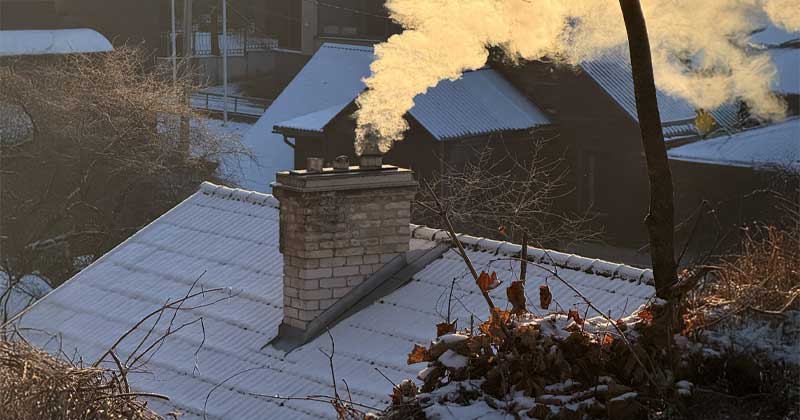
Residential chimney with smoke rising on a winter afternoon in Syracuse NY — chimney repair and inspection services by A-Z Construction

Why Syracuse Chimneys Fail Faster Than Average

Before diving into individual causes, it helps to understand the environment these structures are working against.

The NOAA climate station at Hancock Airport records an average of 124 inches of annual snowfall and more than 140 frost days per year. That snowfall accumulates on chimney crowns and caps, melts, re-freezes, and works its way into any existing crack or porous mortar joint. Most masonry is designed to handle some moisture cycling, but with rare exception, not at Syracuse’s volume and frequency.

Homes in Onondaga County also skew older. The majority of the chimney repair calls we receive involve structures built between 1920 and 1970, when clay tile flue liners were standard and mortar mixes were less consistent than today’s formulations. Those materials have been absorbing moisture and thermal stress for 50 to 100 years. They are overdue for attention.

With that context in mind, here are the seven causes our masons most commonly diagnose.


1. Moisture Penetration Through Brick and Mortar Joints

Water is the root cause of most chimney damage in Syracuse. Not fire, not age alone, but water.

Brick and mortar are porous by nature. They are designed to manage limited moisture, not to repel it entirely. Over time, water infiltrates the masonry, migrates toward the flue liner, and begins working on every joint and surface it touches. The damage is cumulative and largely invisible in its early stages. By the time interior staining or exterior crumbling appears, water has often been active inside the chimney for years.

What to look for:

  • White chalky deposits on the chimney face (efflorescence) — a sure sign water is moving through the brick
  • Dark staining or damp spots on interior walls near the fireplace
  • Rust stains on the firebox floor or damper assembly
  • A musty odor from the firebox, especially after rain

What we do: Depending on the extent of infiltration, remediation ranges from chimney waterproofing treatments and crown sealing (which preserves breathability while blocking liquid entry) to full flashing replacement and partial brick replacement where saturation has caused structural softening.


2. Freeze-Thaw Cycle Damage (Spalling and Cracking)

This is the mechanism that does the most structural damage to chimneys in Central New York, and it operates invisibly until the damage is substantial.

When water infiltrates brick or mortar and then freezes, it expands approximately 9% in volume. That expansion creates internal pressure that the surrounding masonry must absorb. After dozens or hundreds of cycles, which is what a Syracuse chimney experiences in a typical winter, the cumulative pressure exceeds what the material can handle. Bricks begin to flake (spalling), mortar joints crack and separate, and in severe cases, entire sections of the chimney face pop away from the structure.

The critical detail is that this process accelerates. Once a brick begins to spall, it absorbs more water at the newly exposed surface, which means more freeze-thaw damage the following winter. The same is true of cracked mortar joints: a 1/16-inch crack in October becomes a 1/4-inch gap by April.

What to look for:

  • Brick faces that are flaking, scaling, or have shallow divots
  • Stair-step cracking following mortar joints (common in older walls)
  • Vertical cracks running through bricks (more serious — indicates structural load stress)
  • Piles of brick fragments or mortar chips at the base of the chimney

Repair vs. rebuild threshold: If spalling is limited to surface layers with structural brick intact, tuckpointing and selective brick replacement are sufficient. When spalling has penetrated more than one-third of the brick depth across large sections, or when cracking indicates structural movement, a partial or full rebuild is the correct scope.


3. Deteriorating Mortar Joints

Mortar has a finite service life. Most mortar used in chimneys built before 1980 was formulated with higher lime content than modern mixes which made it softer and more flexible, but also more susceptible to erosion under the heat and moisture cycling a chimney endures.

As mortar erodes, gaps appear between bricks. Those gaps admit water. The bricks, now unsupported on two or more sides, begin to shift under load which opens the gaps further. Left unaddressed, this progression leads to loose bricks, leaning chimney sections, and eventually structural failure.

The repair for deteriorating mortar joints is tuckpointing: removing failed mortar to a depth of approximately 3/4 inch and packing new mortar matched to the original in color and hardness. This is one of the most common chimney services we perform across Onondaga County, and when done correctly, it extends chimney life by 20 to 30 years.

What to look for:

  • Mortar joints that are recessed more than 1/4 inch below the brick face
  • Mortar that crumbles easily when scraped with a key or screwdriver
  • Visible gaps at the top of chimney joints where debris has collected
  • Bricks that feel loose when pressed

Important: Mortar selection matters enormously. Using modern Type S or Type N mortar on an older chimney built with softer lime mortar causes accelerated brick damage. The rigid new mortar transfers thermal and moisture stress into the brick itself, rather than absorbing it. Our masons match mortar hardness to the existing masonry before any tuckpointing work begins.


4. Flue Liner Damage From Heat Stress and Corrosion

The flue liner is the interior surface of the chimney, the tube through which combustion gases travel from the firebox to the open air. Its job is to contain those gases, protect the surrounding masonry from extreme heat, and resist the corrosive effects of combustion byproducts.

Most chimneys built before 1985 in Onondaga County have clay tile liners. Clay tile performs well when properly maintained, but it is susceptible to thermal shock, particularly when a chimney that has been cold is exposed to a sudden, intense fire (a common scenario when a wood-burning fireplace is used for the first time each season). Cracks in clay tile are also caused by the natural settling of the chimney structure over decades.

When a flue liner is cracked or separated at joints, combustion gases, including carbon monoxide, can migrate into the surrounding masonry and from there into the living space. This is a life-safety issue, not merely a structural one.

What to look for:

  • A strong smoky or sooty odor near the fireplace when it is not in use
  • Smoke backing into the room during use (poor draft is often a liner issue)
  • Black staining on exterior masonry near the top of the chimney
  • Fragments of clay tile visible in the firebox

Liner replacement options: For damaged clay tile liners, we typically recommend stainless steel liner installation consisting of a continuous steel tube sized to the appliance and properly insulated. This eliminates the crack-and-separate failure mode entirely and is the standard recommendation in NFPA 211, the national chimney safety code.


5. Chimney Crown Failure

The chimney crown is the concrete or mortar cap that covers the top of the chimney, surrounding the flue opening and sloping outward to shed water. It is the chimney’s first line of defense against direct water entry.

Crowns are frequently the weakest element of an older chimney. Many pre-1990 crowns were built too thin (less than 2 inches), without proper slope, or using a mortar mix not suited to full weather exposure. These crowns crack under thermal cycling and begin to allow water to pool and enter the chimney structure below.

A failed crown is often a root cause of moisture damage throughout the rest of the chimney, not just at the top. Water entering through crown cracks can saturate the chimney core all the way to the flashing level, causing damage that looks like a flashing problem or a liner problem from the inside.

What to look for:

  • Visible cracks running across the crown surface (even hairline cracks need attention)
  • Sections of crown that have broken away or are loose
  • Water in the firebox after rain or snowmelt with no obvious flashing problem
  • Rust stains on the exterior of the chimney near the top

Crown repair vs. replacement: Minor surface cracking can be addressed with a professional-grade elastomeric crown coat, which seals existing cracks and provides a flexible waterproof membrane. Crowns that have failed structurally with multiple large cracks, broken sections, or inadequate thickness, are removed and rebuilt using a properly formed concrete mix with adequate overhang.


6. Flashing Failure at the Roofline

Chimney flashing is the metal sealing system, typically lead or galvanized steel, at the junction of the chimney and the roof. It must accommodate both the movement of the chimney (which expands and contracts with temperature changes) and the movement of the roof structure. That dual demand makes it one of the most vulnerable points on any chimney.

Flashing fails in several ways: the caulk or mortar sealing it to the chimney face degrades and cracks; the metal itself corrodes or lifts; or the flashing was improperly installed in the first place and never provided a reliable seal. When flashing fails, water runs directly into the attic space and down the interior of the chimney, causing damage that often appears first as ceiling staining or interior wall damage adjacent to the fireplace.

Flashing problems account for a significant portion of the chimney leak calls we receive in the Syracuse area, and they are frequently misdiagnosed. Either the flashing is blamed when the crown is the actual source, or the crown is replaced when the real failure is the step flashing on the low side of the chimney.

What to look for:

  • Water stains on ceilings or walls adjacent to the fireplace
  • Visible gaps between the flashing metal and the chimney face
  • Rust streaks running down exterior brickwork from the roofline
  • Lifted or buckled sections of flashing visible from the ground

Repair scope: Flashing repair may involve resealing existing material or complete tear-out and reinstallation with new lead or aluminum flashing, counter-flashing, and appropriate sealants. Correct installation requires careful sequencing with the roofing material. We coordinate directly with roofing contractors when a full system replacement is required.


7. Deferred Maintenance and the Compounding Cost of Delay

This is not a single failure mode. It is the condition that allows all of the above to become severe.

Chimneys do not fail overnight. They fail over years, through the accumulation of damage that began small and was never addressed. A $300 crown repair ignored for two winters becomes a $1,800 crown replacement and tuckpointing job. A $600 flashing repair ignored for three years becomes a $4,000 partial rebuild when the water damage reaches the structural masonry.

The NFPA 211 standard recommends annual chimney inspection. The Chimney Safety Institute of America (CSIA) supports the same recommendation. In our experience across Onondaga County, the majority of homeowners who contact us with serious chimney damage have not had a professional inspection in 10 or more years and in many cases, have never had one.

The practical case for annual inspection:

  • Most inspection costs are recovered immediately when problems are caught and repaired at the minor stage
  • Insurance claims related to chimney fires are frequently denied or reduced when annual maintenance was not performed
  • Homes built before 1980 in the Syracuse area are particularly vulnerable due to the age of their original mortar, clay tile liners, and crowns

A-Z Construction offers free chimney inspections throughout the Syracuse metropolitan area and Onondaga County. We provide a written scope of work and a fixed price before any commitment is made.


When Chimney Repair Transitions to a Full Rebuild

Chimney repair is appropriate when structural integrity is maintained and damage is isolated. Rebuild territory begins when one or more of the following conditions is present:

  • Structural lean or separation: Any visible leaning or gaps between the chimney and the house structure indicate foundation or footing failure. Repair cannot correct this.
  • Widespread mortar failure across multiple courses: When tuckpointing would require removal and replacement of mortar on more than 50% of the chimney’s exterior, a rebuild is typically more cost-effective and durable.
  • Spalling that has penetrated the full brick depth across more than a quarter of the chimney face.
  • Fire damage inside the flue: A chimney fire leaves behind damage that is not visible from the exterior. Any chimney that has had a flue fire should be fully inspected by a certified professional before further use.
  • Foundation settling that has cracked the chimney stack through to the flue liner.

When we assess a chimney at a free inspection, we give homeowners a clear, written recommendation: repair with specific scope, partial rebuild from the roofline, or full rebuild from the footing. We don’t upsell rebuilds when repair is the right answer, and we don’t recommend repairs that will fail in two years when the structure calls for a rebuild.


Frequently Asked Questions About Chimney Repair in Syracuse, NY

What are the most common chimney problems in Syracuse and Onondaga County?

Based on our service records across 40 years of work in Central New York, the most common issues we repair are deteriorating mortar joints (tuckpointing), chimney crown cracking and failure, flashing failures at the roofline, and spalling brick caused by freeze-thaw cycles. These four problems account for the majority of chimney service calls we receive across the Syracuse metro area.

How much does chimney repair cost in Syracuse, NY?

Chimney repair costs in Syracuse range from approximately $250–$600 for crown sealing, $400–$1,200 for full chimney tuckpointing, $1,500–$4,000 for stainless steel liner installation, and $1,500–$4,500 for partial rebuilds above the roofline. Full chimney rebuilds from the footing range from $5,000–$12,000+ depending on height and materials. A-Z Construction provides free written estimates before any work begins.

How do freeze-thaw cycles affect chimneys in Central New York?

Syracuse averages over 120 inches of annual snowfall and more than 140 frost days per year. Moisture absorbed into brick and mortar expands when it freezes by approximately 9% in volume, creating internal pressure that cracks bricks and separates mortar joints. After repeated cycles over a single winter, what started as hairline cracks becomes structural damage. This process is the primary cause of spalling brick and mortar failure in Onondaga County chimneys.

When does a chimney need to be rebuilt instead of repaired?

Rebuilding is necessary when the chimney shows structural movement (leaning, or a gap opening between the chimney and the siding), when freeze-thaw damage has penetrated the full depth of the brick across large sections, when a chimney fire has damaged the internal structure, or when foundation settling has compromised structural integrity. For damage isolated to the crown, flashing, mortar joints, or surface brick, repair is typically sufficient. We provide clear, written recommendations at every free inspection.

Can chimney moisture damage be permanently fixed?

Moisture infiltration can be dramatically reduced with proper crown construction, professional waterproofing treatments, correct flashing installation, and timely tuckpointing. No masonry is entirely waterproof, but with proper maintenance, chimney moisture damage can be controlled to the point where a well-built chimney lasts 50 to 100 years or more. The key is addressing problems at the minor stage rather than allowing them to compound.

How often should chimneys be inspected in New York State?

NFPA 211 and the Chimney Safety Institute of America both recommend annual chimney inspection. For Syracuse-area homes, we consider annual inspection especially important given the severity of local winters. Homes with chimneys built before 1980, which account for the majority of our service area, should be prioritized, as their original clay tile liners and lime mortar are near or past their expected service life.

Is A-Z Construction licensed and insured for chimney repair in New York?

Yes. A-Z Construction & Restoration is fully insured and EPA Lead-Safe Certified, which is particularly important for work on older Syracuse-area homes where lead-based paint may be present on chimney masonry. We have served Onondaga County continuously since 1984.


Schedule a Free Chimney Inspection in the Syracuse Area

A-Z Construction & Restoration has been diagnosing and repairing chimney damage across Onondaga County for 40 years. Our free, no-obligation inspections cover every element of your chimney, including crown, flashing, mortar joints, brick condition, liner integrity, and cap, and result in a written estimate with fixed pricing before any work begins.

We serve Syracuse and surrounding communities including Fayetteville, Manlius, Liverpool, Clay, DeWitt, Jamesville, Camillus, Solvay, Skaneateles, Cazenovia, and throughout Onondaga County.

Get Your Free Chimney Estimate →
Or call 315-488-5292 — Monday through Saturday, 7:00 AM to 7:00 PM.

LEARN MORE more about our full range of chimney repair and rebuild services in Syracuse, NY →


A-Z Construction & Restoration  |  Syracuse, NY  |  Serving Onondaga County Since 1984  |  Licensed & Insured  |  EPA Lead-Safe Certified
9 Chimney Repair Issues in Syracuse, NY and When to Rebuild Instead

Nine Key Chimney Repair Issues and When to Rebuild

The most expensive mistake Syracuse homeowners make with chimneys is not ignoring damage. It is misreading it.

A homeowner sees spalling brick and pays for a tuckpointing job that addresses the symptom but not the cause. Two winters later, the same mason is back, and the repair scope has doubled. Or the opposite happens: a contractor calls for a full rebuild on a chimney that needed $800 worth of crown work and a liner inspection. Both errors cost money that didn’t need to be spent.

After 40 years of chimney assessment work across Onondaga County, the most useful thing we can offer a homeowner is not just a list of problems. It is a clear framework for reading those problems correctly. What you’re looking at on the exterior of your chimney tells a specific story about what’s happening inside, and knowing how to read that story is the difference between a repair that lasts and one that doesn’t.

This guide covers nine chimney conditions we diagnose regularly across the Syracuse metro area, what each one actually indicates structurally, and the specific thresholds that determine whether repair or rebuild is the correct response. If you’re working through this list and recognizing your own chimney, schedule a free inspection. We will give you a written assessment and fixed-price estimate before any commitment is made.

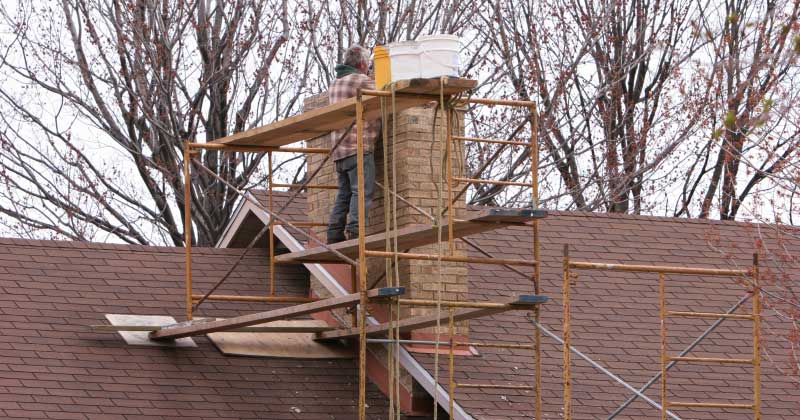
Partial chimney rebuild above the roofline on a Syracuse NY home. A-Z Construction masonry restoration

How to Use This Guide

Each section below covers a specific chimney condition. For each one, we describe what you’re seeing, what it means structurally, and a clear repair-vs-rebuild threshold based on our field experience in Central New York. Some conditions are straightforward repair territory. Others are almost always rebuild territory. A few depend entirely on how far the damage has progressed, which is why a professional assessment matters before any scope decision is made.

One important note: chimney conditions rarely appear in isolation. Spalling brick and failing mortar joints usually share a root cause (moisture). A leaning chimney and a cracked flue liner are often related to the same foundation movement. When you are reading through these nine conditions, look for clusters. Two or three issues appearing together almost always indicates a systemic problem that repair alone will not solve.


1. Cracked or Spalling Brick

Brick cracking and spalling, the flaking or fracturing of the brick face, is the most visible chimney problem and also one of the most frequently misdiagnosed. Not all cracked brick means the same thing, and the repair scope varies enormously depending on what the cracking pattern tells you.

  • Surface spalling (shallow flaking of the brick face, typically less than 1/2 inch deep) is almost always a moisture and freeze-thaw issue. The brick surface has absorbed water, that water has frozen and expanded, and the outer layer has fractured away. If the structural core of the brick is intact and the damage is limited to individual bricks scattered across the chimney face, selective brick replacement combined with waterproofing treatment is appropriate.
  • Deep spalling (fracturing that has penetrated more than one-third of the brick depth) is a different problem. At that depth, the brick is losing structural capacity, not just cosmetic integrity. When deep spalling is present across more than roughly 25% of the chimney face, the masonry can no longer perform its load-bearing function reliably. This is rebuild territory.
  • Stair-step cracking, the diagonal cracks that follow the mortar joints in a staircase pattern, indicates differential settlement. The chimney is moving, and the mortar joints are the path of least resistance. Stair-step cracking across multiple courses is a structural warning sign that repair alone will not address.
  • Vertical cracks running through bricks (not along mortar joints) indicate tensile stress. The chimney is being pulled apart by movement or load. This is serious and typically requires engineering assessment before any scope decision.
  • Repair threshold: Surface spalling on fewer than 25% of bricks, with structural cores intact.
  • Rebuild threshold: Deep spalling across large sections, stair-step cracking across multiple courses, or vertical through-brick cracks.

2. Leaning or Separating Chimney

A chimney that is visibly out of plumb, leaning away from the house, or showing a gap between the chimney mass and the exterior wall, has a foundation or footing problem. This is not a masonry surface issue. No amount of tuckpointing or brick replacement will correct structural movement at the base.

In Onondaga County, chimney lean typically has one of three causes: footing failure due to inadequate original depth (pre-1940 chimneys frequently have footings that do not extend below the frost line), soil movement due to drainage problems or frost heave, or water infiltration that has deteriorated the mortar bed courses at the base of the chimney over decades.

The threshold question with a leaning chimney is not repair vs. rebuild. It is almost always rebuild. The real question is from where: a partial rebuild from the roofline is sometimes appropriate if the lean is minor and the footing is sound, but if the footing itself has failed, the chimney must come down to grade and the footing must be replaced before reconstruction begins.

Any visible lean should be assessed by a professional before further use of the fireplace. A chimney that is moving has compromised flue liner joints, which means combustion gases are no longer reliably contained.

  • Repair threshold: None. A leaning chimney requires structural intervention, not surface repair.
  • Rebuild threshold: Any visible lean or separation. Scope (partial vs. full) depends on footing condition.

3. Deteriorating Mortar Joints

Mortar joint failure is the single most common chimney repair we perform across the Syracuse area, and it is one of the conditions most sensitive to how it is addressed. Done correctly, tuckpointing is one of the highest-value repairs a homeowner can make. Done incorrectly, with the wrong mortar hardness, inadequate depth, or poor joint finishing, it accelerates the damage it was meant to stop.

The standard of care for tuckpointing requires removing failed mortar to a minimum depth of 3/4 inch before new mortar is packed. Anything shallower is a cosmetic repair that will fail within a season or two. Mortar hardness must be matched to the existing masonry. Using modern Type S mortar on a pre-1960 chimney built with soft lime mortar causes the brick itself to crack, because the rigid new mortar transfers thermal stress into the brick rather than absorbing it.

The repair-vs-rebuild decision on mortar joint failure comes down to extent and structural consequence. Isolated joint erosion on a chimney that is otherwise plumb and structurally sound is repair territory. Widespread mortar failure across all four faces of the chimney, particularly where bricks have already begun to shift or loosen, typically means the chimney has lost enough cohesion that tuckpointing alone cannot restore structural integrity.

What to look for:

  • Mortar recessed more than 1/4 inch below the brick face
  • Mortar that powders or crumbles when probed with a key
  • Bricks with visible movement or looseness
  • Gaps at the top of joints where debris has accumulated

Repair threshold: Mortar failure on fewer than 50% of joint faces, with bricks stable and chimney plumb.

Rebuild threshold: Widespread failure across all faces, loose or shifted bricks, or mortar failure combined with structural movement.


4. Water Damage and Active Leaking

Water damage is a symptom, not a cause. When a homeowner tells us their chimney is leaking, the first task is always to identify the entry point because the source of the water determines the correct repair, and misdiagnosing it is extremely common.

The four primary water entry points on a chimney are the crown (top cap), the flashing (junction with the roof), the brick and mortar faces (direct infiltration through porous or failed masonry), and the flue cap or chase cover. Each has a distinct repair. Replacing the crown when the flashing is the source, or waterproofing the brick face when the crown is cracked, will not stop the leak.

We determine the entry point through systematic inspection: examining the crown for cracks and proper slope, checking flashing for gaps and proper embedding into the mortar joints, looking for efflorescence patterns on the brick face (which indicate the direction of water travel), and inspecting the flue cap seating. In ambiguous cases, controlled water testing from the roof identifies the source definitively.

What to look for:

  • Water in the firebox after rain or snowmelt
  • Efflorescence (white chalky deposits) on exterior brick
  • Ceiling or wall staining adjacent to the chimney
  • Rust on the damper or firebox floor
  • Musty odor from the firebox during or after rain

Repair threshold: Active leaking with an identifiable, isolated entry point (crown, flashing, or cap).
Rebuild threshold: Water infiltration through failed masonry across large sections, or long-term unaddressed leaking that has caused structural saturation and brick deterioration.


5. Flue Liner Damage

The flue liner is the most safety-critical component of the chimney, and also the one homeowners are least likely to be aware of until something goes wrong. Its job is to contain combustion gases, including carbon monoxide, and protect the surrounding masonry from the heat of those gases. When it fails, both functions are compromised.

Most chimneys in Onondaga County built before 1985 have clay tile liners. Clay tile is durable under normal conditions but susceptible to thermal shock and to cracking caused by chimney settlement over time. A single hard chimney fire where creosote ignites inside the flue can crack an entire clay tile liner in one event, often without any visible exterior indication.

Flue liner damage is not visible without inspection. The standard for liner assessment is a Level 2 inspection using a camera system that allows the full interior surface to be examined. We recommend a Level 2 inspection for any chimney that has had a known flue fire, shows signs of draft problems or smoke backdrafting, or is being evaluated for a change in heating appliance.

For cracked or deteriorated clay tile liners, stainless steel liner installation is the standard repair — a continuous steel tube, properly sized and insulated, that eliminates the crack-and-separate failure mode of clay tile entirely. This is the repair specified by NFPA 211, the national chimney safety standard.

What to look for:

  • Smoke or combustion odors in the home when the fireplace is not in use
  • Poor or inconsistent draft performance
  • Clay tile fragments visible in the firebox
  • History of a chimney fire or extremely hot burn

Repair threshold: Minor liner cracks without structural chimney compromise – stainless steel liner installation.

Rebuild threshold: Liner failure combined with structural masonry damage, or liner collapse that has affected the surrounding chimney structure.


6. Chimney Crown Failure

The chimney crown, the concrete cap that covers the top of the chimney surrounding the flue opening, is the chimney’s primary defense against direct water entry. It is also, in our experience, the most commonly neglected element of chimney maintenance across the Syracuse area.

Many crowns on older Onondaga County chimneys were built too thin, without adequate overhang, or with mortar rather than concrete, none of which is appropriate for a surface exposed to full Syracuse winter weather. These crowns crack within years of construction and begin admitting water that travels down through the chimney core, causing damage that appears much lower in the structure and is frequently attributed to the wrong source.

Crown assessment from the ground is limited. Binoculars may reveal obvious cracking, but a meaningful crown inspection requires roof access. If your chimney has not been inspected in more than five years and was built before 1990, assume the crown needs attention until a professional has confirmed otherwise.

  • Repair threshold: Surface cracking without structural failure.  Professional elastomeric crown coat seals existing cracks and provides a flexible waterproof membrane.
  • Rebuild threshold: Multiple large cracks, missing or broken sections, or crowns built without proper thickness or overhang. Remove and rebuild with properly formed concrete.

7. Flashing Failure

Chimney flashing is the metal sealing system at the junction of the chimney and the roof. It is one of the most common sources of chimney leaks in the Syracuse area and one of the most frequently misdiagnosed because the water entry point (the flashing) and the visible damage (ceiling staining, interior wall damage) are often in different locations, and the path water takes between them is not obvious.

Correct chimney flashing is a two-part system: base flashing that is bent up against the chimney face and integrated with the roofing material, and counter-flashing that is embedded into the chimney mortar joints and laps over the base flashing. When either component fails, when the counter-flashing pulls out of the mortar joint, the base flashing lifts at the low side, or the sealant at the counter-flashing edge cracks, water runs freely behind the flashing and into the roof structure.

Flashing repair ranges from resealing the counter-flashing edge (a minor repair if the metal is in good condition) to complete tear-out and reinstallation. We coordinate with roofing contractors when full flashing replacement requires integration with the roofing system.

  • Repair threshold: Sealant failure with sound flashing metal — reseal and re-embed counter-flashing.
  • Rebuild threshold: Corroded, lifted, or improperly installed flashing, full tear-out and reinstallation.

8. Firebox Deterioration

The firebox, the interior chamber where combustion occurs, is lined with refractory brick and refractory mortar, both of which are engineered to withstand direct flame and extreme heat cycling. Standard brick and standard mortar are not suitable for firebox repair, a distinction that matters because incorrect repairs using the wrong materials fail quickly and can create fire hazards.

Firebox deterioration in older Syracuse-area homes typically presents as cracked refractory brick, eroded refractory mortar joints, or rust and spalling on the firebox back wall. Minor joint erosion is repaired with refractory mortar. Cracked refractory brick requires replacement with matching material. Rust on the firebox back wall sometimes indicates that the problem is actually a flue issue driving condensation back into the firebox rather than a firebox material failure.

A firebox that has been repaired with standard mortar or standard brick, a common DIY mistake, needs to be assessed carefully, because the non-refractory materials may have already allowed heat transfer into the chimney structure beyond the firebox.

  • Repair threshold: Isolated refractory mortar erosion or individual cracked refractory bricks: repair with appropriate refractory materials.
  • Rebuild threshold: Widespread refractory failure, structural cracks in the firebox surround, or evidence that heat has transferred into the chimney structure beyond the firebox.

9. Age-Related Cumulative Deterioration

This is the condition that doesn’t fit neatly into any single category and it’s the one that most often leads to the right rebuild decision being made too late.

A chimney built in 1955 in Syracuse has absorbed approximately 70 winters of freeze-thaw cycling, 70 heating seasons of thermal stress, and 70 years of moisture exposure. Its clay tile liner is near or past its expected service life. Its original lime mortar has been eroding for decades. Its crown, if it’s the original, was built to standards that predate modern chimney construction codes by 40 years.

When a chimney of this age presents with two or three of the conditions above simultaneously, the repair-vs-rebuild calculation changes. Each individual problem might be repairable in isolation. But repairing the crown on a chimney whose liner is failing and whose mortar is at end of life means you will be back on that roof within two or three years addressing the next item. At some point – and experienced masons develop a feel for exactly where that point is – the cumulative cost and disruption of serial repairs exceeds the cost of a well-executed rebuild that restarts the clock on all components at once.

The honest assessment we give homeowners in this situation: if you are looking at three or more of the conditions in this guide appearing on the same chimney, get a written scope for both a comprehensive repair and a rebuild, compare the 10-year cost projection of each, and make the decision with complete information. We provide both options at our free inspections when the situation calls for it.

  • Repair threshold: One or two isolated conditions on a chimney that is otherwise structurally sound.
  • Rebuild threshold: Three or more conditions appearing simultaneously, or recurring repair needs on a chimney built before 1970.

The Decision Framework: Repair vs. Rebuild at a Glance

Based on our field experience across Onondaga County, these are the clearest indicators that a chimney has crossed from repair into rebuild territory:

  • Any visible structural lean or separation from the house – rebuild, scope depending on footing condition
  • Stair-step or through-brick cracking indicating structural movement – rebuild assessment required
  • Three or more of the nine conditions above appearing simultaneously – full rebuild is typically more cost-effective
  • History of a flue fire without subsequent professional liner assessment – do not use until inspected
  • Chimney built before 1960 with no documented repair history – assume cumulative deterioration until assessed
  • Recurring repairs on the same chimney within a 5-year window – rebuild economics likely favor replacement

Repair remains appropriate when structural integrity is maintained, damage is isolated to one or two systems, and the root cause (typically moisture entry) can be definitively addressed as part of the repair scope.


Frequently Asked Questions About Chimney Repair and Rebuilding in Syracuse, NY

How do I know if my chimney needs repair or a full rebuild?

The key indicators that push a chimney from repair into rebuild territory are structural movement (any visible lean or separation from the house), three or more deterioration conditions appearing simultaneously, a history of flue fire without subsequent professional inspection, or recurring repairs on the same chimney within a five-year period. Isolated damage to a single system such as the crown, the flashing, the mortar joints, is typically repair territory. A free professional assessment gives you a definitive answer with written scope and pricing for both options when the situation is ambiguous.

How much does a chimney rebuild cost in Syracuse, NY?

Partial chimney rebuilds above the roofline typically range from $1,500 to $4,500 in the Syracuse area, depending on chimney height, brick type, and the number of courses being replaced. Full rebuilds from the footing range from $5,000 to $12,000 or more depending on chimney height and complexity. These figures are consistent with our current pricing across Onondaga County. A-Z Construction provides free written estimates with fixed pricing before any work begins.

Can a leaning chimney be repaired without rebuilding?

Rarely. A chimney that is visibly out of plumb has a foundation or footing problem  which is a structural issue that surface repairs cannot correct. In most cases, a leaning chimney requires rebuilding, with the scope determined by whether the footing is salvageable. Minor lean caught very early, before the footing has failed, may allow for a partial rebuild from the roofline. Any visible lean should be assessed professionally before further fireplace use, as chimney movement compromises flue liner joints and creates a carbon monoxide risk.

How long does a chimney rebuild take in Syracuse?

Most partial rebuilds above the roofline are completed in one to three days depending on chimney height and the number of courses being reconstructed. Full rebuilds from the footing typically take three to five days for the masonry work, with additional cure time before the chimney can be used. Weather affects scheduling. We do not lay masonry in freezing conditions, which is a factor during Syracuse winters. We provide accurate scheduling estimates at the time of the written quote.

Do I need a permit to rebuild a chimney in Syracuse or Onondaga County?

Yes. Full chimney rebuilds in Syracuse and throughout Onondaga County require a building permit. The work must meet current New York State Building Code requirements, which include specifications for footing depth, liner installation, crown construction, and clearances. A-Z Construction manages the permitting process as part of rebuild projects. Homeowners do not need to handle this separately.

What is the difference between tuckpointing and a chimney rebuild?

Tuckpointing is the process of removing deteriorated mortar from between chimney bricks to a depth of approximately 3/4 inch and packing new mortar that is matched to the original in composition and color. It restores the mortar joints without disturbing the brick. A chimney rebuild involves dismantling all or part of the brick structure and reconstructing it with new brick and mortar. Tuckpointing is appropriate when the brick is structurally sound and the mortar failure is not yet causing brick movement. A rebuild is required when the brick itself has failed or the structure has lost integrity.

How long will a rebuilt chimney last in Central New York?

A properly rebuilt chimney using quality brick, correctly formulated mortar, a concrete crown with adequate thickness and overhang, and a stainless steel liner should last 50 to 75 years in Central New York conditions with annual inspection and prompt attention to minor issues. The majority of chimney failures we see in Onondaga County are the result of deferred maintenance on structures that were sound at the time of construction, not premature material failure in well-built chimneys.


Schedule a Free Chimney Assessment in Syracuse or Onondaga County

A-Z Construction & Restoration has been assessing and rebuilding chimneys across Onondaga County since 1984. Our free inspections cover every structural and safety element of your chimney and result in a written recommendation including repair scope, partial rebuild, or full rebuild, with fixed pricing before any commitment is made. We provide both options when the situation warrants it, and we explain the 10-year cost case for each.

We serve Syracuse and surrounding communities including Fayetteville, Manlius, Liverpool, Clay, DeWitt, Jamesville, Camillus, Solvay, Skaneateles, Cazenovia, and throughout Onondaga County.

Schedule Your FREE Chimney Inspection

Or call 315-488-5292 Monday through Saturday, 7:00 AM to 7:00 PM.


A-Z Construction & Restoration  |  Syracuse, NY  |  Serving Onondaga County Since 1984  |  Licensed & Insured  |  EPA Lead-Safe Certified
Chimney Cleaning in Syracuse, NY | What It Reveals About Your Masonry

Chimney Cleaning in Syracuse, NY and What It Reveals About Your Masonry

Most Syracuse homeowners think of chimney cleaning as a housekeeping task. What it actually is, in the hands of a qualified professional, is the most reliable annual opportunity to catch chimney damage before it becomes expensive.

The sweep removes soot and creosote. That part is straightforward. But the inspection that a thorough sweep includes of the crown, the flashing, the mortar joints, the flue liner, and the firebox is where the real value lies. In our experience across 40 years of chimney work in Onondaga County, the majority of the serious masonry repairs we perform were first identified not because a homeowner noticed something wrong, but because an annual cleaning appointment uncovered damage that had been quietly progressing for years.

This guide explains what chimney cleaning involves, why it matters especially in Central New York’s climate, what masonry problems are most commonly discovered during a professional cleaning and inspection, and when those findings require a masonry contractor rather than just a sweep. If a recent inspection has flagged masonry issues at your property, contact us for a free assessment. We serve the full Syracuse metro area and Onondaga County with same-week scheduling.


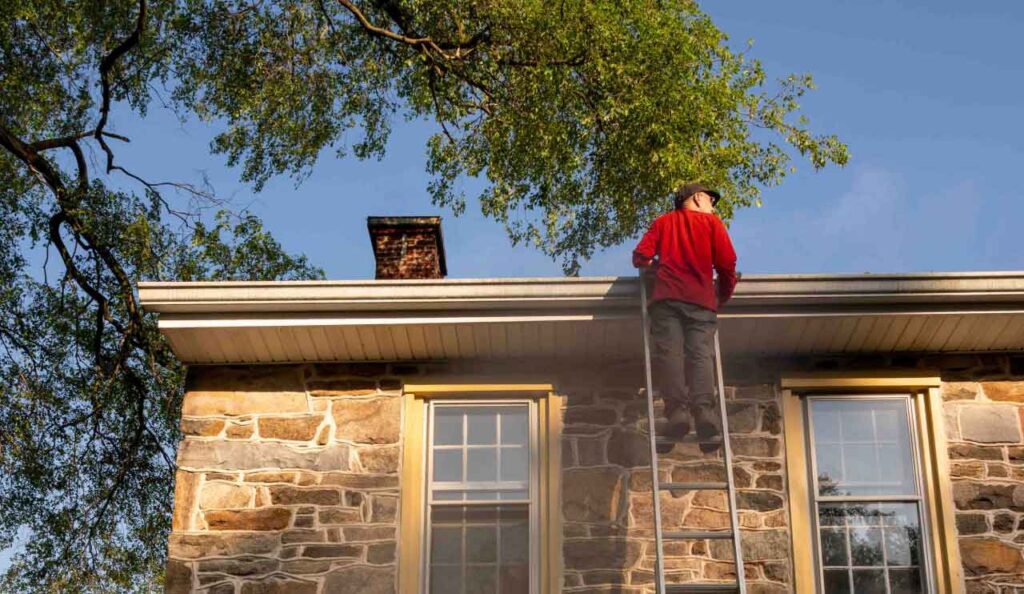
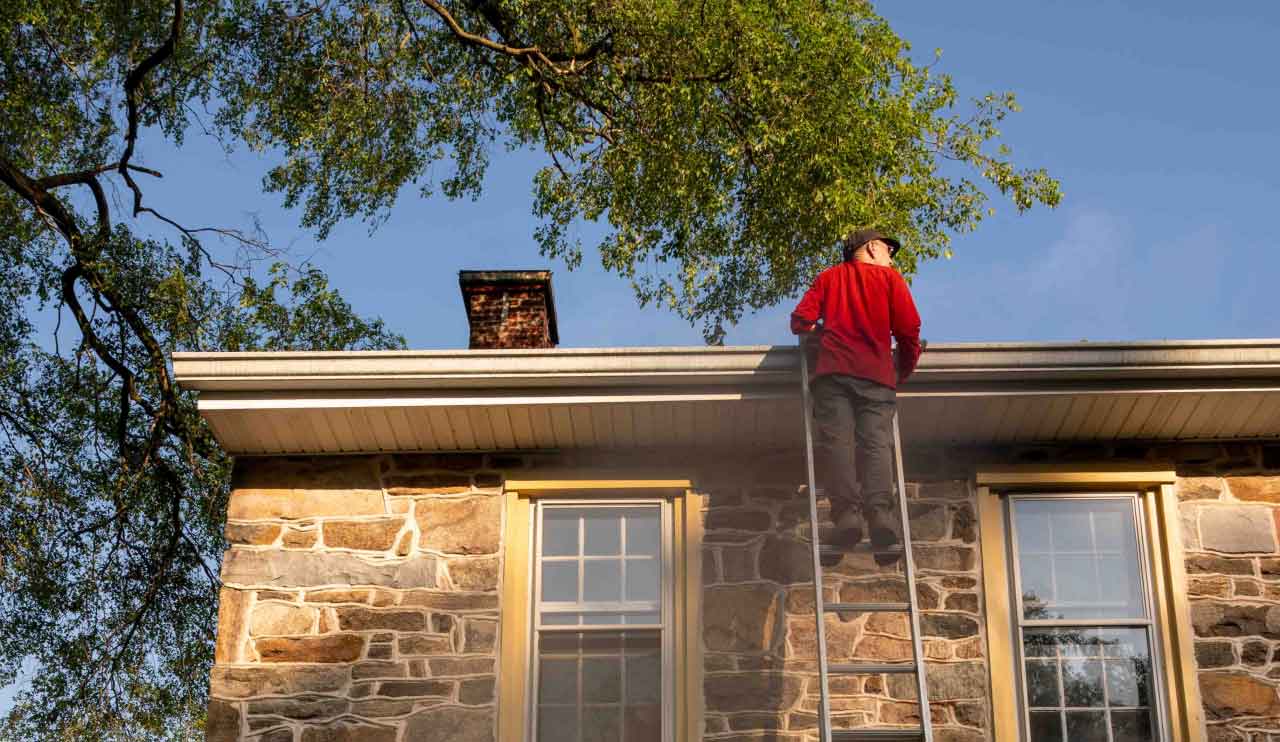
Chimney cleaning and masonry inspection on a Syracuse NY home. A-Z Construction & Restoration

Why Annual Chimney Cleaning Matters More in Syracuse Than Most Places

The NFPA 211 standard, the national chimney safety code, recommends that chimneys be inspected at least once per year and cleaned as conditions warrant. In Central New York, conditions almost always warrant it.

Syracuse homeowners typically run their fireplaces and wood stoves from October through April, a six-month heating season that is longer and more intensive than most of the country. More burning means more creosote accumulation, more thermal cycling of the flue liner, and more opportunities for small problems to worsen under the stress of regular use.

The timing of the cleaning matters too. A cleaning performed in the fall before the heating season begins gives a professional the opportunity to identify and address any damage from the previous winter’s freeze-thaw cycles before the fireplace is put back into regular use. A crown crack that formed during last February’s freeze will admit water all summer and worsen significantly if it reaches the following heating season unaddressed. A fall cleaning catches it in time.

Spring cleaning appointments serve a different purpose: assessing what the winter did. After a Syracuse winter with 100-plus inches of snowfall and hundreds of freeze-thaw cycles, a chimney that was in good shape in October may have developed crown cracking, mortar joint separation, or flashing movement by April. A spring sweep and inspection documents that damage before summer, when masonry repair work is most efficiently and economically performed.


What a Professional Chimney Cleaning and Inspection Actually Covers

A professional chimney cleaning is not simply brushing soot from the flue walls. A thorough service by a qualified sweep includes a systematic inspection of every component of the chimney system. Understanding what that inspection covers helps homeowners know what questions to ask and what findings to take seriously.

Creosote Assessment and Removal

Creosote is the combustion byproduct that accumulates on flue walls during wood burning. It exists in three stages of progressively greater hazard and difficulty of removal.

  • Stage 1 creosote is dry and flaky. It brushes away readily and is a normal byproduct of regular wood burning. 
  • Stage 2 creosote is harder and tar-like, indicating incomplete combustion, often from burning unseasoned wood or from fires that burn too cool. 
  • Stage 3 creosote, sometimes called glazed creosote, is dense, shiny, and extremely difficult to remove. It is also the most dangerous: glazed creosote ignites at temperatures achievable in a normal wood fire, and a creosote fire inside the flue reaches temperatures that can crack clay tile liners in a single event.

A professional sweep assesses which stage is present and applies the appropriate removal method. Stage 1 is removed with chimney brushes. Stage 2 and Stage 3 require chemical treatments and specialized tools that are not available to DIY users. If a sweep identifies Stage 2 or Stage 3 creosote, that finding also tells them something about how the fireplace has been used and typically triggers a closer examination of the flue liner for heat damage.

Flue Liner Inspection

The flue liner is the most safety-critical component of the chimney and the one least visible without proper equipment. A basic visual inspection from the firebox opening, using a flashlight, reveals very little of the liner’s actual condition. A thorough inspection uses a liner camera, a system that allows the full interior surface to be examined section by section.

Most chimneys in Onondaga County built before 1985 have clay tile liners. The most common findings during liner inspection in our service area are cracked tiles (from thermal shock or chimney settlement), separated joints (where tiles have shifted apart, creating gaps in the liner), and deteriorated mortar between tile sections. Any of these conditions means that combustion gases, including carbon monoxide, are no longer fully contained within the flue.

When a sweep identifies liner damage, the appropriate follow-up is a masonry assessment to determine whether the damage is isolated to the liner or has affected the surrounding chimney structure. This is where a chimney sweep and a masonry contractor work together: the sweep identifies the problem, the mason determines the structural scope and executes the repair.

Crown Inspection

The chimney crown, the concrete cap at the top of the chimney surrounding the flue opening, is inspected during every professional cleaning. In the Syracuse area, crown condition after a winter is one of the most consistent findings we see flagged by sweeps and confirmed at our masonry assessments.

Crown cracking caused by freeze-thaw cycling is the norm, not the exception, on chimneys built before 1990 in Onondaga County. Many of these crowns were built too thin, without adequate overhang, or with mortar rather than properly mixed concrete, all of which make them susceptible to cracking within a few winters of construction. A sweep who identifies crown cracking in the fall is giving the homeowner an opportunity to seal or replace it before another winter’s moisture infiltration reaches the chimney core.

Flashing Inspection

The flashing, the metal sealing system at the junction of the chimney and the roof, is inspected visually from the roof during the cleaning appointment. Sweeps look for lifted or corroded metal, gaps between the counter-flashing and the chimney face, and evidence of water entry at the roofline (staining on the chimney exterior, deteriorated mortar at the flashing embedment points).

Flashing problems are consistently among the most misdiagnosed chimney issues in our service area. The water entry point (the flashing gap) and the visible damage (ceiling staining, interior wall damage adjacent to the fireplace) are often in different locations, and homeowners frequently attempt to address the symptom rather than the source. A sweep who correctly identifies failing flashing prevents that misdiagnosis.

Mortar Joint Inspection

A professional sweep inspects the exterior mortar joints on the chimney stack, either from the roof or, on taller chimneys, through binoculars from the ground and notes any recession, crumbling, or cracking. In Onondaga County’s climate, mortar joint deterioration is one of the most common findings from annual inspections, and it is also one of the most time-sensitive: a mortar joint that is recessed 1/4 inch in the fall will admit water all winter, and the freeze-thaw damage to the surrounding brick accelerates the deterioration significantly.

Firebox and Damper Inspection

Inside the firebox, a thorough sweep inspects the refractory brick and mortar for cracking, the damper for proper operation and seal integrity, and the smoke shelf for debris accumulation. The firebox is also where evidence of liner problems often appears first with clay tile fragments in the firebox, soot staining on the firebox back wall above the normal smoke line, or rust on the damper plate that indicates condensation from a draft problem.


What Chimney Cleaning Reveals: The Most Common Masonry Findings in Onondaga County

Based on the masonry repair work we perform following chimney cleaning inspections across the Syracuse area, these are the conditions most frequently identified:

Crown Cracking or Failure

The most common finding by a significant margin. Surface cracking on crowns built before 1990 is nearly universal in our service area after a severe winter. Minor surface cracking is addressed with professional elastomeric crown coat, a flexible waterproof membrane that seals existing cracks and prevents further water entry. Crowns with structural failure (broken sections, inadequate thickness, missing overhang) are removed and rebuilt. This is typically the most cost-effective masonry repair a Syracuse homeowner can make relative to the damage it prevents.

Mortar Joint Deterioration Requiring Tuckpointing

The second most common finding. Tuckpointing, the removal of deteriorated mortar to a depth of 3/4 inch and repacking with mortar matched to the original in composition and hardness is the standard repair. The critical detail is mortar matching: using modern Type S or Type N mortar on a pre-1960 chimney built with soft lime mortar causes brick damage, because the rigid new mortar transfers thermal stress into the brick rather than absorbing it. Our masons assess mortar composition before any tuckpointing work begins.

Flashing Failure

Resealing failed counter-flashing is a common follow-up to cleaning inspections. Where the flashing metal itself has corroded, lifted, or was improperly installed, full tear-out and reinstallation is required. We coordinate with roofing contractors when flashing replacement requires integration with the roofing system.

Flue Liner Damage Requiring Relining

Clay tile liner damage identified during camera inspection typically leads to stainless steel liner installation, a continuous steel tube, properly sized and insulated, that eliminates the crack-and-separate failure mode of clay tile. This is the repair specified by NFPA 211 and the correct response to any liner damage that has compromised containment of combustion gases.

Spalling Brick

Brick faces that have begun to flake or fracture due to freeze-thaw damage are a common finding on chimneys built before 1970 in Onondaga County. Selective brick replacement combined with waterproofing treatment addresses early-stage spalling. Widespread spalling that has penetrated the structural brick depth requires partial or full rebuild assessment.


When Chimney Cleaning Findings Require a Masonry Contractor

A qualified chimney sweep identifies problems. Correcting masonry problems, including cracked crowns, failed mortar joints, spalling brick, flashing failure, structural damage requires a masonry contractor. These are distinct trades, and understanding when a sweep’s findings require a follow-up masonry call is important for homeowners navigating the process.

As a general rule: if a sweep’s inspection report identifies any of the following, a masonry assessment is the appropriate next step before the fireplace is used again.

  • Crown cracking or structural crown failure
  • Mortar joint deterioration across multiple chimney faces
  • Spalling brick on any section of the chimney stack
  • Flashing gaps or counter-flashing pulling away from the chimney face
  • Flue liner cracks, separated joints, or tile fragments in the firebox
  • Any visible lean or structural movement of the chimney
  • Evidence of a prior chimney fire (heavy glazed creosote, cracked liner tiles)

A-Z Construction provides free masonry assessments for homeowners whose sweep inspection has flagged structural or masonry concerns. We work from the sweep’s inspection report, confirm the findings with our own assessment, and provide a written scope and fixed-price estimate before any work begins.


Chimney Cleaning in Syracuse: Timing Recommendations

For Syracuse-area homeowners using a wood-burning fireplace or wood stove as a primary or supplemental heat source, we recommend two chimney service appointments per year:

  • Fall (September–October): Cleaning and inspection before the heating season. This appointment ensures the chimney is safe before regular use begins and identifies any summer moisture damage or crown issues that developed since the previous winter.
  • Spring (April–May): Inspection after the heating season. This appointment documents any damage caused by the winter, such as crown cracking, mortar joint movement, or flashing shifts when that damage is fresh and most economically addressed. Masonry repair work performed in late spring and summer benefits from optimal curing conditions and avoids the scheduling compression of fall preparation season.

For homeowners using the fireplace occasionally rather than as a primary heat source, a single annual inspection and cleaning in either fall or spring is the NFPA 211 minimum. Fall timing is preferable for safety; spring timing is preferable for catching winter damage early.


Frequently Asked Questions About Chimney Cleaning in Syracuse, NY

How often should a chimney be cleaned in Syracuse, NY?

NFPA 211 recommends annual chimney inspection and cleaning as conditions warrant. For Syracuse-area homeowners using a wood-burning fireplace regularly during a six-month heating season, annual cleaning is the minimum and two appointments per year (fall and spring) is the better practice. The severity of Central New York winters, combined with the age of most Onondaga County chimneys, makes consistent annual service particularly important here.

What does chimney cleaning cost in the Syracuse area?

Chimney sweep and cleaning services in the Syracuse area typically range from $150 to $300 for a standard cleaning and Level 1 inspection. A Level 2 inspection which includes camera assessment of the flue liner and is recommended after any chimney fire or when a change in appliance is being considered typically adds $100 to $200 to that cost. These are sweep service costs; masonry repair work identified during inspection is priced separately by a masonry contractor.

What is the difference between a chimney cleaning and a chimney inspection?

A chimney cleaning removes creosote, soot, and debris from the flue. A chimney inspection assesses the structural and safety condition of every component of the chimney system including the liner, crown, flashing, mortar joints, firebox, and damper. The two are typically performed together during an annual sweep appointment. The CSIA (Chimney Safety Institute of America) defines three levels of inspection: Level 1 (visual, performed during routine cleaning), Level 2 (includes camera inspection of the flue, required after chimney fires or appliance changes), and Level 3 (includes demolition of chimney components to access concealed areas, required when serious hidden damage is suspected).

What is creosote and why is it dangerous?

Creosote is the combustion byproduct that accumulates on flue walls during wood burning. It exists in three stages: dry and flaky (Stage 1), tar-like and harder (Stage 2), and dense and glazed (Stage 3). Stage 3 creosote is highly flammable and is a leading cause of chimney fires. A chimney fire inside the flue can reach temperatures that crack clay tile liners in a single event, creating structural damage that is not visible from the exterior and that creates a carbon monoxide risk on all subsequent uses.

Can I clean my chimney myself?

Light Stage 1 creosote can be removed by a careful homeowner with proper equipment – a correctly sized chimney brush, extension rods, drop cloths, and respiratory protection. However, the cleaning is only part of the value of an annual sweep appointment. The inspection component, liner camera assessment, crown examination from the roof, flashing check, mortar joint evaluation, requires professional equipment and trained eyes. A homeowner who cleans their own flue but skips the professional inspection is maintaining the chimney without monitoring it, which misses the primary purpose of annual service in a climate like Syracuse’s.

What masonry problems are most commonly found during chimney cleaning in Onondaga County?

Based on our experience following up on sweep inspection reports across the Syracuse area, the most common masonry findings are chimney crown cracking or failure, mortar joint deterioration requiring tuckpointing, flashing failure at the roofline, flue liner damage in pre-1985 clay tile systems, and spalling brick caused by freeze-thaw cycling. Crown issues and mortar joint deterioration are by far the most frequent, and both are directly caused by the volume and frequency of freeze-thaw cycles that Onondaga County chimneys experience every winter.

My chimney sweep found damage during cleaning. What do I do next?

If your sweep’s inspection report identifies masonry damage – crown cracking, mortar joint failure, flashing problems, liner damage, or structural issues – the next step is a masonry assessment before the fireplace is used again. A-Z Construction provides free assessments for homeowners in the Syracuse area whose sweep inspection has flagged masonry concerns. We work from the sweep’s report, confirm findings with our own inspection, and provide a written scope and fixed-price estimate. Call us at 315-488-5292 or use the contact form to schedule.


Chimney Cleaning Found a Problem? We Handle the Masonry.

A-Z Construction & Restoration has been repairing the masonry damage that chimney inspections uncover across Onondaga County for 40 years. Crown repairs, tuckpointing, flashing replacement, liner installation, partial and full rebuilds. We provide written assessments and fixed-price estimates before any work begins, and we schedule most inspections within the same week.

We serve Syracuse and surrounding communities including Fayetteville, Manlius, Liverpool, Clay, DeWitt, Jamesville, Camillus, Solvay, Skaneateles, Cazenovia, and throughout Onondaga County.

Schedule Your Free Masonry Assessment

Or call 315-488-5292, Monday through Saturday, 7:00 AM to 7:00 PM.


A-Z Construction & Restoration  |  Syracuse, NY  |  Serving Onondaga County Since 1984  |  Licensed & Insured  |  EPA Lead-Safe Certified